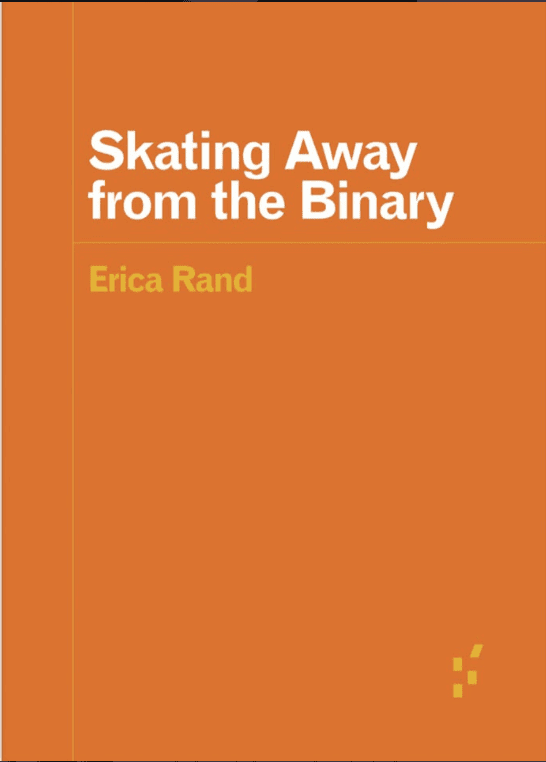
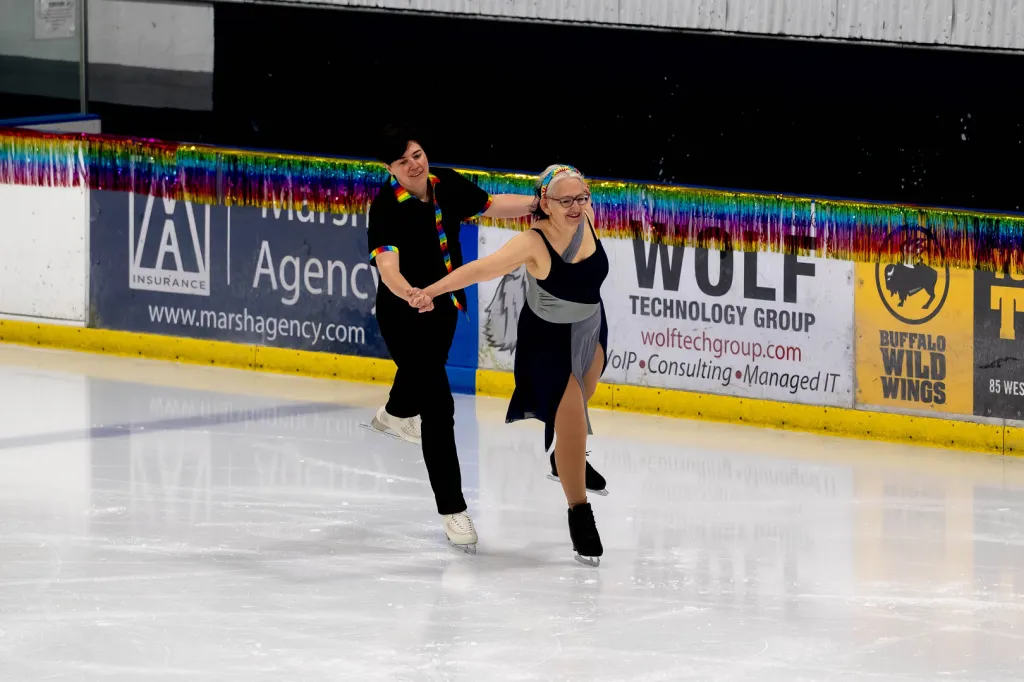
In 2026, academic and adults pairs skater Erica Rand published a short book called ‘Skating Away from the Binary’, where she unpacks the preconceptions surrounding gender within figure skating, and how these tie into exclusionary regulations in the sport.
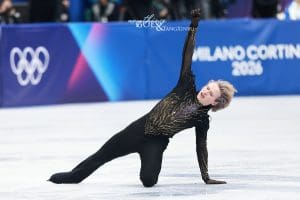
In this article, I take a closer look at some of the most salient points that she raises in the text, and reflect upon figure skating’s relationship with gender, race, and the rise in anti-trans policies.
“Unfortunately, it gets more relevant every day,” Rand said over Zoom when I asked her how she felt about the book since its publication.
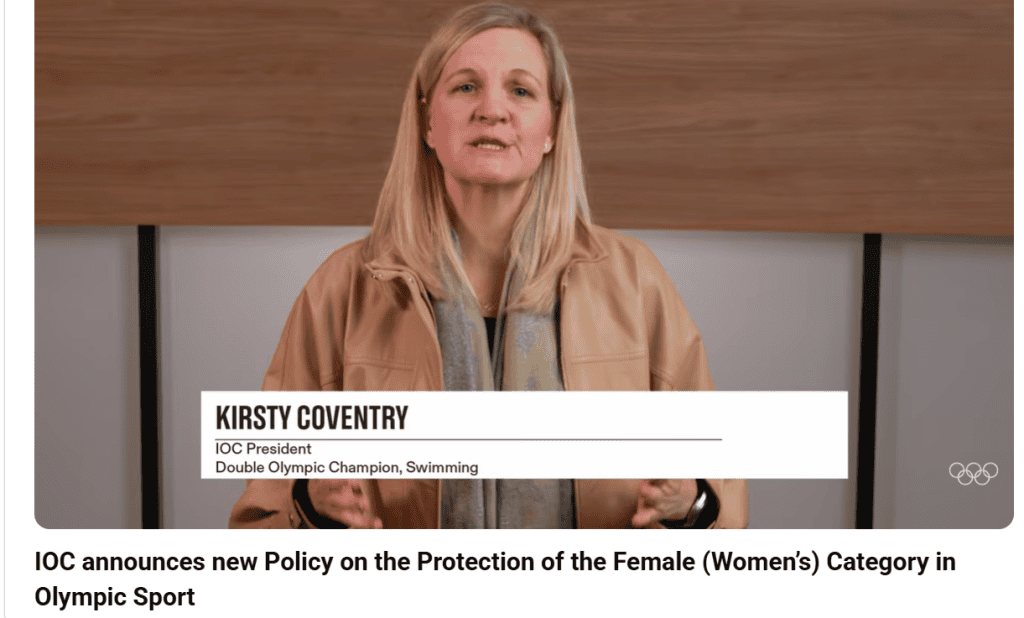
Over the past year, the IOC has announced a ban on transgender women athletes competing in women’s categories, and the United States Figure Skating (USFS) governing body announced that only those who had been listed as female on their birth certificate could compete in the “female” category.
These discourses barring trans women from competing in women’s events find themselves closely linked to a wider network of rigid preconceptions about gender in figure skating.
Rand spoke of her own relationship with gender as a skater, and the sport’s restricted image of femininity. “Partly through ideas of dress and presentation and other things, I present what I understand to be a femininity that doesn’t actually match figure skating femininity,” she said. “Like, I have short hair and black skates, for example.”
Presenting as more visibly queer has been “really helpful”, she added: “I’ve noticed that people come into the rink for their first skating lessons, and they might be relieved and happy to see a pretty more obviously queer person there. […]And it helps me with my coaching in various ways […] to think about how gender norms are baked into all aspects of skating.”
These gender norms find themselves especially pertinent in pairs skating and show up in both the smaller and bigger pictures: aside from “the huge question of, does the pair boy present – you know, that stem and the flower/ picture in the frame analogy”, it crops up even in “[things] like crossovers”.
In a podcast episode with The Future of Figure Skating, she equally spoke of how these rigid – and sexist – ideals of femininity within skating equally gives rise to how we speak of pairs, and the ways in which our use of language “belittles the athleticism” of pairs women.
Those intertwined categories of human, non-human, and male and female […] those dichotomies are connected.
One of the core ideas in Skating Away from the Binary is how these ideals of femininity in skating are inextricably linked to whiteness. Rand’s use of the term “white femininity” (p.4) helps us understand how being deemed as “sufficiently feminine” in the sport is shaped around eurocentric standards.
“What is ideal femininity in figure skating, I think, has long come from this white aristocratic ideal,” Rand explained.
“And that’s one of the things that contributes to how white supremacy is involved at the center of skating, and other practices like dance. I also think there’s a long history of how the idea of who is human and who […] the ideal human being [is] comes to be represented by white colonialist men. And those intertwined categories of human, non-human, and male and female […] how those dichotomies are connected. To me, that explains a lot about sport, ranging from who’s the boss in sports, who owns sports, all those other things, to who performs and who other people can be in charge of.”
Aside from the effect that privileging whiteness and eurocentrism could have on judging – setting racialised boundaries for “what joyous expression or any other kind of expression should be” has meant that “some people [of colour] have been routinely underscored, I think” – in pair skating, the unit of two people skating together both fuels, and is fuelled by, “racialized heteronormativity”.
Racialized heteronormativity generates “these ideals of who make up the ideal team. And the whole idea that […] there are tiny little women skating with very big muscular men in a certain way depends on racialized ideals in the sense of who is understood to be ideally feminine and who is understood to be ideally masculine, whose skating is really appreciated, whose bodies are appreciated for muscularity.”
This idea of a level playing field, like you could ever get to one, is just ridiculous.
What if in skating, somebody said you can’t go to the Olympics if you spend more than $3,000 a year on training?”
Aside from ‘whiteness’, the standard of ‘femaleness’ is further marked by another trait: that of ‘nontransness’. The exclusion of transgender people from sport, of which figure skating is no anomaly, “has become an increasingly effective tool in the multipronged attempt to deny trans people legitimacy, care, participation in public life, and living itself.” (p.8)
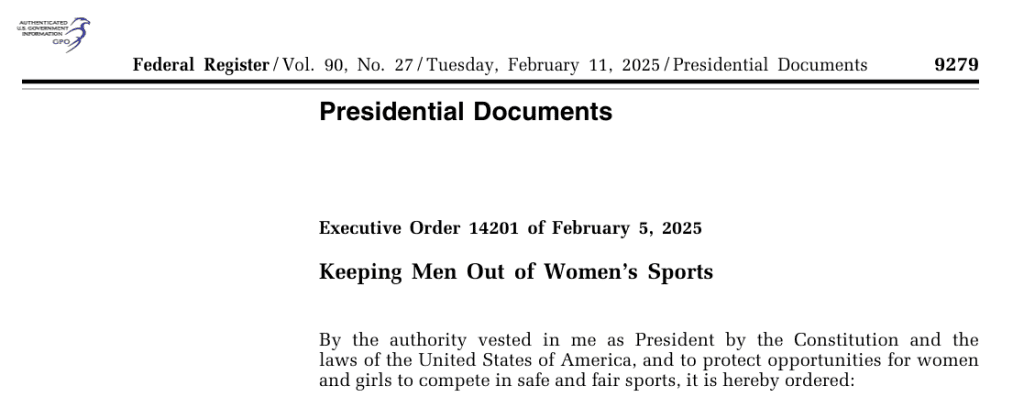
In February 2025, Trump signed an executive order titled “Keeping Men Out of Women’s Sports” banning transgender women from competing in female categories of sports, citing a desire to “protect opportunities for women and girls to compete in safe and fair sports.”
Allowing trans women to compete as women, by this logic, would mean decreased opportunities for cis women, and creating an unfair playing field for athletes.
Yet, as Rand points out in her book, there exists a wide network of “’broader systemic issues that often lurk behind popular narratives about athletic ambition’, which include but are not limited to “unequal access to education” or “precarious employment” (p.30). In fact, “sports rarely regulate the most common contributor to physical advantage: the economic resources that can access coaching, training time […]” (p.38).
“This idea of a level playing field, like you could ever get to one, is just ridiculous,” she said during our Zoom conversation.
“And right now all these people are focused on trans girls and women in sport having these inherent advantages. First of all, they don’t have inherent advantages. You could say, for instance, that trans people in general have competitive disadvantages because they have to start out with a body that doesn’t work for them. They face all kinds of prejudice. They face so many barriers you could actually call being trans a competitive disadvantage.”
“But in addition, there are so many factors that go into competitive advantage, and so many of them depend on money. How much coaching can you get in skating? How much ice time can you get? Can you eat nutritious food? Can you pay for skates that fit and do exactly what you want them to for that or other people? Do you have supportive families? Did you have examples from other people? And other things like, for some sports, are you tall or short?” Rand noted that in order to play professional basketball these days, people generally need to be tall. Yet no one is either criticizing the people effectively excluded for shortness, or advocating to exclude extremely tall people for unfair advantage.
Reflecting on the multitude of factors which go into competitive advantage in sport – most of which, incidentally, go more or less unmentioned – Rand spoke of how she was “just really struck by how much sport depends on people either having innate advantages that other people don’t have sometimes, and how many resources are involved.”
“Can you imagine what would happen if somebody said, nobody whose parents could send them to sports camp could be in a sport. Or if your parents could pay to get you private coaching on the side, you can’t be in a sport. Those things that are really advantages. Or what if in skating, somebody said you can’t go to the Olympics if you spend more than $3,000 a year on training?”
T talk and unpacking the myth of testosterone
In their 2018 article ‘The Powers of Testosterone: Obscuring Race and Regional Bias in the Regulation of Women Athletes’, Katrina Karkazis and Rebecca M. Jordan-Young coin the term “T talk” to refer to the “web of direct claims and indirect associations that circulate around testosterone both as a material substance and as a multivalent cultural symbol” (p.7).
What is more, sex testing for T, as well as the criteria for being ‘legitimately feminine’, is anything but unbiased, objective, and apolitical. In fact, we see the ‘ideal feminine’ once more married to the notion of ‘whiteness’.
“Sports authorities […] have consistently indicated that the women investigated for high levels of naturally occurring T are exclusively from the Global South, and all indications are that they are black and brown women” (p.5), echoing colonialist narratives which associate “ ‘failures’ of dichotomous sex with failures of modernity, characteristic of countries or regions outside the industrialized West” (p.6).
The belief in the “putative advantage conferred by T” (p.28) and its intersection with the ideals of white femininity, then, places certain bodies in the public eye, scrutinises them and strips them of both their dignity and privacy. Privacy as such becomes “a specific form of privilege that is reserved for those with favored racial, gender, sexual, class, or national status” (p.10).
The infallible belief in the primacy of testosterone as a determiner of athletic potential and ability therefore “obscures how the regulation benefits those with more power and privilege, making it look like defense against unfairness rather than the exercise of power” (p.28).
We don’t know what the limits are when we try things only within a set of values.
Rand’s work highlights how skating, and pair skating in particular, functions as a microcosm for preconceived notions of gender, sexuality, and performance.
Yet with a simple shift in perspective, we can understand how figure skating simultaneously holds the potential to push and challenge these very boundaries and think about how else we can create.
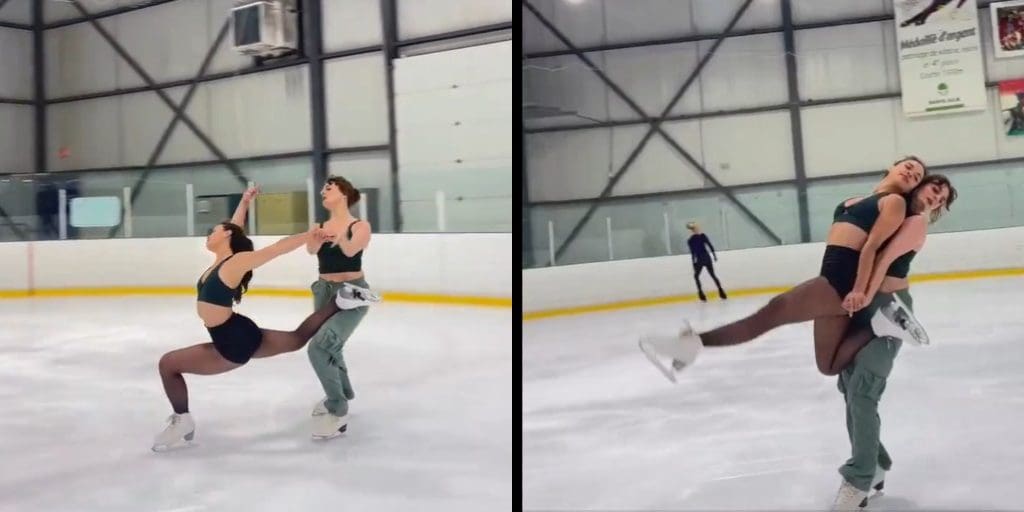
Madison Saverino, a Theater on Ice skater who saw her performance to Chappell Roan’s “Pink Pony Club” go viral on Instagram in 2025, spoke about the influence of drag in her performances. “I think I always had a hard time figuring out who I was or how to express myself off the ice. But as soon as I was skating, doing a program, I just felt like it was a chance to tell a story of myself or whatever character I am being. And I find so much freedom in that it makes me feel at home. I just remember seeing a lot of myself in the [drag] queens and it gave me confidence just watching them.”
“I think there can and has been rigid, spoken or even unspoken, rules about gender/gender presentation in skating,” she added. “I just think the ice is a blank canvas ready to be painted. Skating is an art form, and there is room for everyone when it comes to art […] I think skating does offer that blank canvas to people to create a character, try a new identity, or even maybe embrace something within themselves that they have been too scared to put out there, I know it has done that for me. And I think it is a wonderful and important thing for people to be able to explore, and I hope to see more people tapping into that and using that as a tool to maybe break down some of those barriers when it comes to gender norms in skating.”
Rand raised the possibility of an entirely new way of evaluating programs: “What kind of different world would we be in if you got rewarded for going against gender norms, instead of it being risky to put in front of judges pair skating or dance that goes against gender norms? What if there was an explicit value to it?”
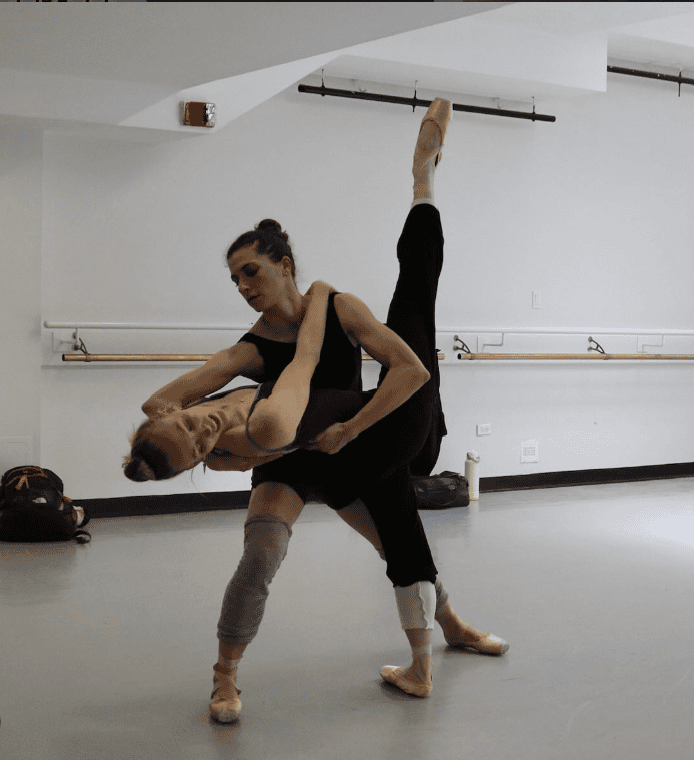
#Queertheballet, a movement and association which aims to shed light on queer female and nonbinary dancers, and alternative ways of choreographing dance, provides an example of how partnerwork can be made to break free of the heteronormative mold. In an interview with the Guardian in 2021, founder Adriana Pierce said that overhead lifts would not form a part of a choreography, being incredibly gendered and decreasing the possibilities of movement and agency. The inclusion of trans and genderqueer bodies, and choreography which extends beyond the boundaries of ‘traditional’ ballet, increases the opportunities for what can happen on stage: “I want people to see that ballet can be more than a man lifting a woman in a tutu,” Pierce said.
“We don’t know what the limits are when we try things only within a set of values,” Rand said to me. “What would pairs be like and who would be doing pairs if, you know, being able to lift someone in the air with one hand or something were not considered the ultimate form of a lift?”
What trans people and all people should have is pleasure and abundance, not just the ability to survive.
Rand said that during her last copy editing revision for the book, she “kept thinking there’s too much joy in here and there needs to be more about everything terrible.”
Yet “at the same time, I thought part of what seems so important is to understand what is the joy that people can have from participating in these activities,” as well as the fact that “what trans people and all people should have is pleasure and abundance, not just the ability to survive. […] But I do think it’s important to convey both what’s terrible and what could be possible from trying different things.”
Against the backdrop of antitrans policies ramping up locally, nationally, and internationally, “it’s also super-important how many people are working, in quiet or splashy ways, to make skating better, including more inclusive.”
In 2025, Rand and her skating partner Anna proposed opening up US adult pairs so that pairs of any gender combination could compete in the same events, and wrote a position paper called The Case for Open Pairs and Dance. The two also worked with other skating activists to launch the Figure Skating For All (FS4A) project, in response to USFS’s policy change in 2025, and created an Open Letter demanding that USFS reverse the policy.
By fighting against the systemic barriers in figure skating which have only become harsher over the past year, Skating Away from the Binary, as well as projects and skaters working to dismantle and challenge regulations both old and new, shed much-needed light on “the collective project of turning figure skating into a sport that loves all of us back” (p.7).
MORE ON ERICA RAND:
Erica Rand is Professor of Art and Visual Culture and of Gender and Sexuality Studies at Bates College, with a focus in queer and trans studies. She skates with Anna Kellar in a gender non-conforming adult figure skating pairs team.
The website (figureskatingforall.org) includes an Open Letter to US Figure Skating, which skaters, fans, and supporters are invited to sign, demanding that US Figure Skating reverse the policy and a resource page for people interested in learning more about the issues and ways to support trans and gender nonconforming skaters.
Subscribe to our Patreon to support our work!