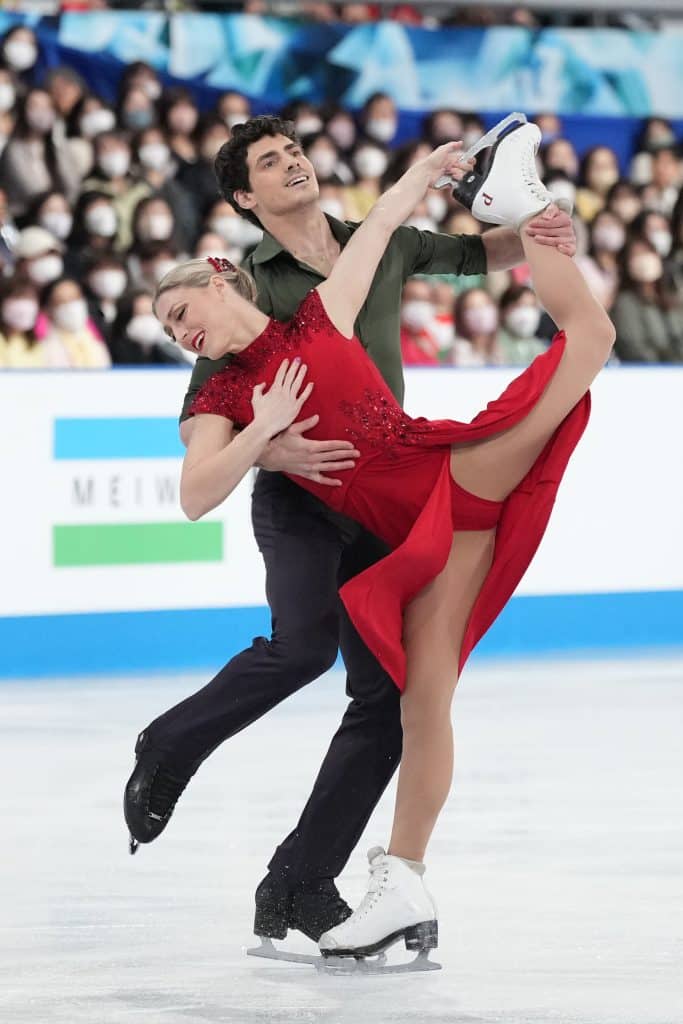


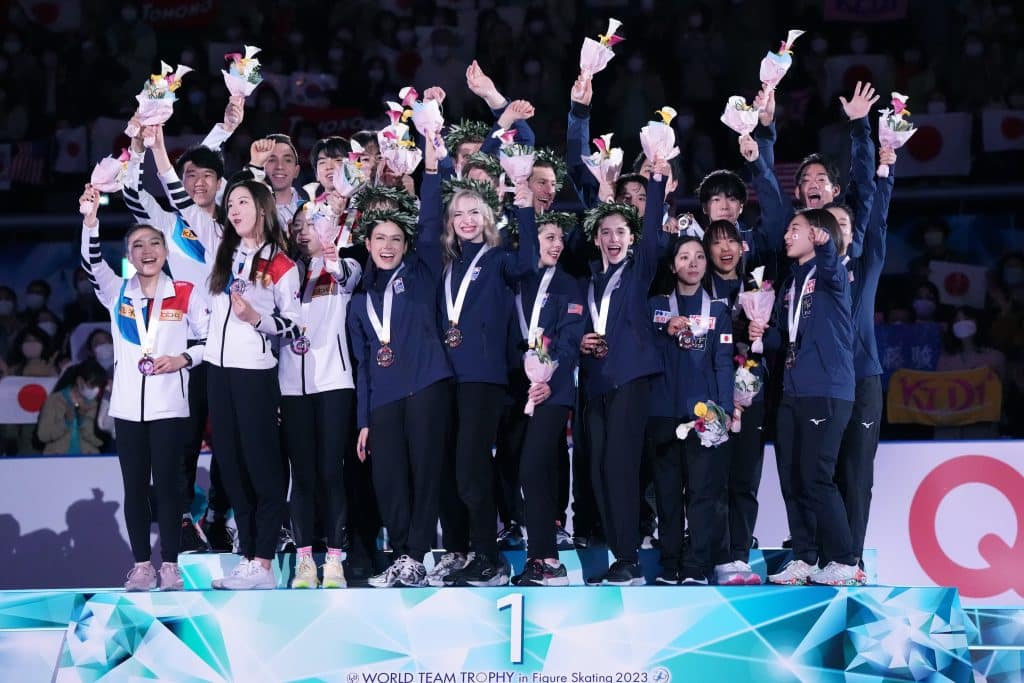
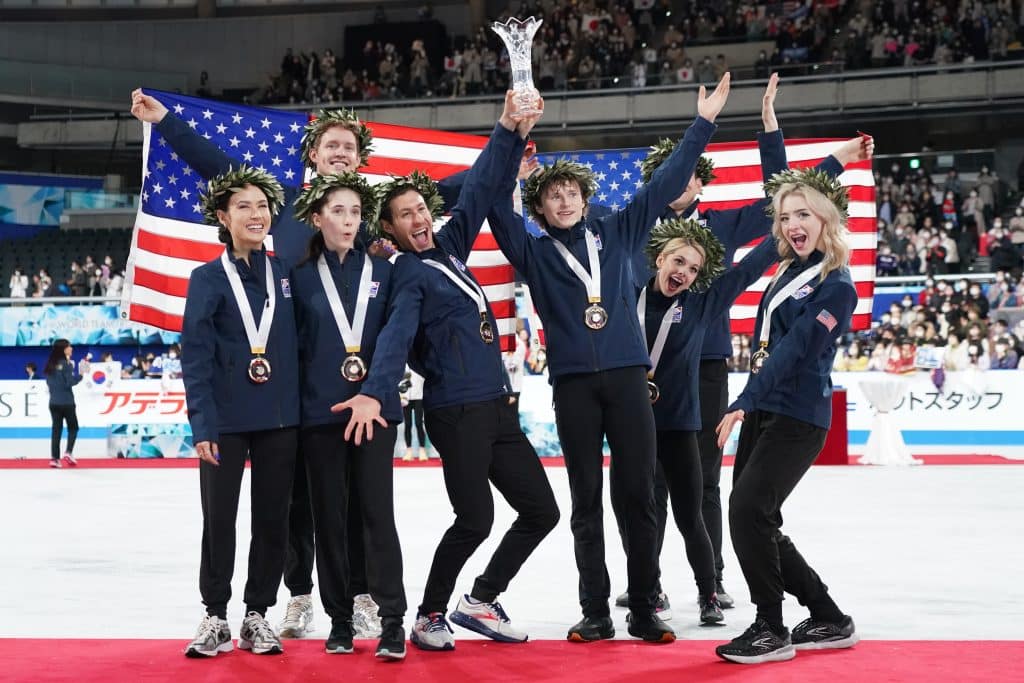
The World Team Trophy is a biannual event, and took place in Tokyo, Japan. As a team event with six countries competing against each other, it enabled the athletes to come together and cheer each other on, making for an enthused and lively atmosphere in the stadium. Read on to find out more about the performances put forward by the skaters for the last time this season!
Results
🥇 Team USA
🥈 Team Republic of Korea
🥉 Team Japan
Team USA
Ilia Malinin earned a season’s best score in the short program of 105.90 and took the lead in the event. It was a clean performance to ‘I Put a Spell on You’, which saw him nail the quad-lutz triple toe combination, the quad toe and the triple axel with ease and great takeoffs. It was arguably the best artistic performance we have seen from him this season, with development shown since his first outing in the 2022 US Classic. In his free skate to ‘Euphoria’, he fell and under-rotated the opening quad axel, and did the same for his second quad lutz, which was moreover a repeated jump. Other jumping errors, such as a triple toe loop landed on the quarter, and a triple lutz popped into a double, further lowered his TES. However, he landed three quads in the first half of his program, with +3.25 GOE for the toeloop and +3.61 for the lutz. There were new details in the choreo sequence, and he engaged with the audience during this element as well.
Jason Brown put out two stunning performances at the World Team Trophy. In his short program to ‘Melancholy’, he delivered a sublime skate, going for a high quality, all-triple layout. Brown is a skater who always pays equal attention to each detail in the choreography, dedicating himself to every movement, thereby making the program one cohesive whole, rather than just its constituent elements. There was a split jump going into the triple lutz, and his centered spins displayed both flexibility and graceful lines. His free skate to ‘The Impossible Dream’ saw a step out of the second triple axel attempt, judged as on the quarter with a -3.66 grade of execution. Nonetheless, he was clean elsewhere with level fours for all spins and the step sequence; the performance highlighted the seamless quality of his skating. The step sequence showcased balletic elegance, and the climactic moment of the song was accompanied by an Ina Bauer to accentuate the moment.
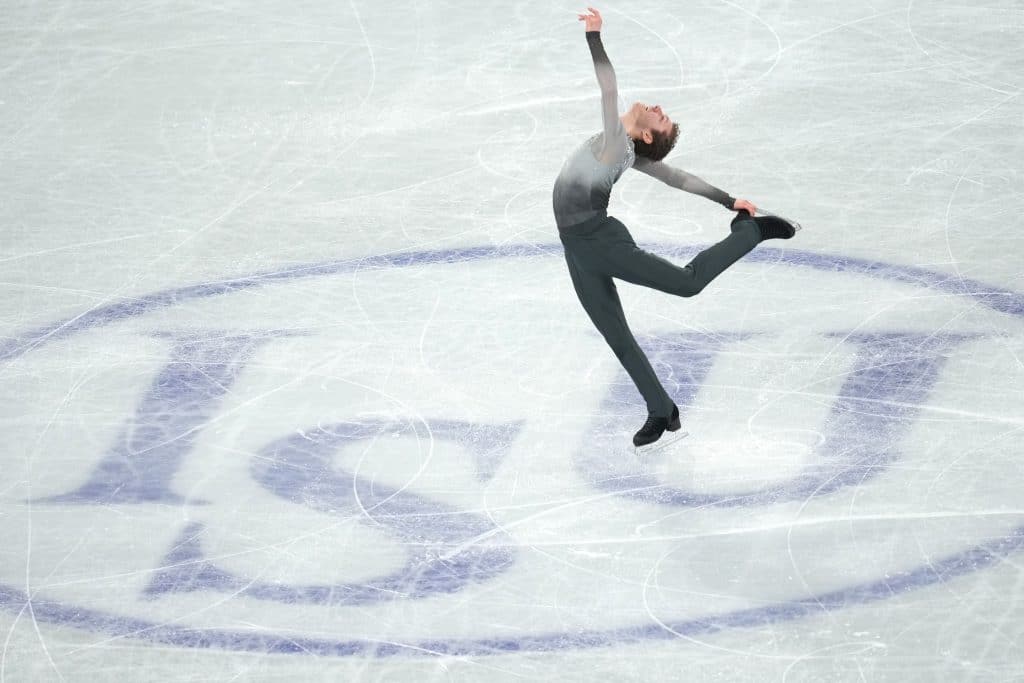
Isabeau Levito showcased detailed, precise footwork from the very beginning of her short program to ‘Una Noche Mas’. She is a confident and charming skater, and her beautiful spins demonstrated flexibility and poise, and they were all given level fours by the judges. Her free skate again had great positions in the opening choreography, and Levito landed all her jumps solidly, apart from an under-rotated triple loop in the first combination. Her program had transitional content linking the elements to one another, and she secured level fours in the spins and step sequence once more. She earned 142.65 points for the skate: just over a point under her personal best.
Amber Glenn gave a magnetic performance to ‘Hit the Road Jack’ in her short program; she is a powerful and dynamic skater. Although the triple flip-triple toe saw a -0.08 grade of execution, the rest of her program was clean. Glenn matched the increasing energy of the music stride for stride as the program progressed, finishing with a compelling, level four step sequence. She attempted and landed the triple axel in the free skate, although it was under-rotated upon landing. The skate highlighted her skills as a performer who is able to project towards spectators throughout a program. She accumulated and retained much speed throughout the performance and showed great ice coverage in the choreo sequence near the end of the program.
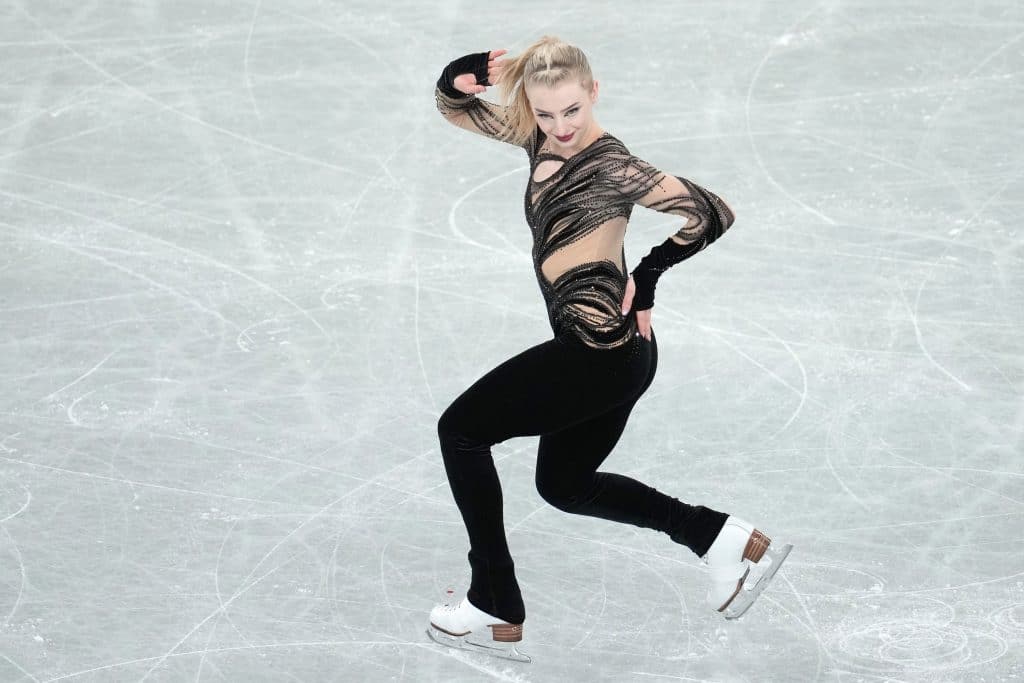
Alexa Knierim and Brandon Frazier came first in both skates at the World Team Trophy. In their short program to ‘Separate Ways’, they opened their performance with interesting shapes and movements in the choreography, making for an eye-catching beginning. The team were secure throughout their whole program, with a strong side-by-side triple toe loop, and a similarly top quality throw triple flip. Although it was an intense choice of music, they emulated this tonality with skill and maintained the style for the duration of their skate. They earned a personal best of 82.25 points. Their free skate was to ‘Sign of the Times’, and they put out another PB-scoring performance. Their throw triple loop had great distance and was given a GOE of +2.43, with 5s from most of the judges. Although there was a fall on the side-by-side salchows, they received high grades of execution across all other elements. The choreo sequence was used to match the climax of the song, and the two projected strongly towards the audience.
Madison Chock and Evan Bates performed a remix of ‘Let’s Dance’ for their rhythm dance, and displayed well-matched twizzles, which were given level fours and +3.77 GOE. The three subsequent elements were also given level fours, and they showed a great build-up towards the choreo rhythm sequence at the end, making for a creative and engaging conclusion to their skate. Their free dance possessed conceptual and original choreography, which the team committed to for the whole performance, maintaining the same level of intensity and emotion for the entirety of the free dance. They paid close attention to the intricacies of the difficult choice of music and secured high levels and grades of executions for all elements; they were given a high TES and PCS to constitute a total segment score of 138.41.
Team Republic of Korea
Junhwan Cha was second place in the short program, and first in the free skate. The World silver medalist skated to a Michael Jackson medley in the SP, performing with intensity but simultaneously maintaining a lightness and buoyancy to the performance. Cha opened his program with a beautiful quad salchow and followed this up with a solid triple lutz-triple loop and a triple axel. The level four step sequence had great engagement of the torso and arms. Breaking the 100-point barrier with 101.33 points, he received a new personal best. In his James Bond free skate, Cha delivered a top-quality quad salchow once more on the beat of the music, and followed this up with a 4T, 3Lz-3Lo, and 3F, all of the same high calibre. This strong first half paved the way for a solid latter half of the program, although there was a singled axel and a triple lutz landed on the quarter. He captured the allure of ‘No Time to Die’ with skill and received 187.82 points for his performance.
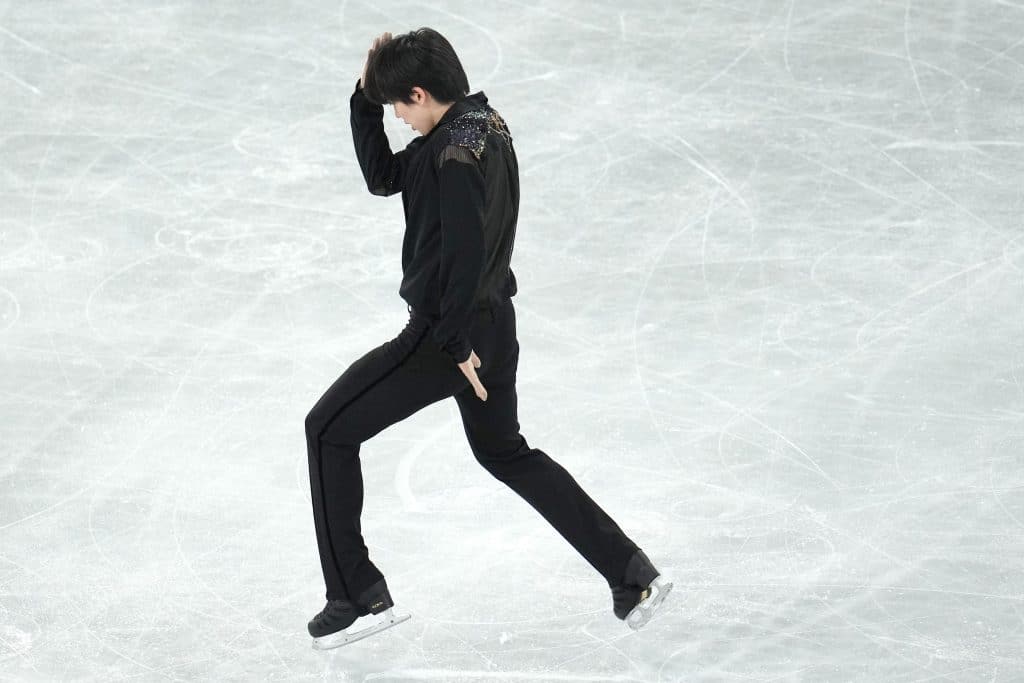
Sihyeong Lee skated to ‘Feeling Good’ in his short program, and although he fell on the opening quad loop, he was clean in the other elements, with a good triple axel and triple lutz-triple toe combination. He reflected the suave tones of the piece in his level four step sequence, and demonstrated laudable flexibility in the high kick in this element. His free skate to the soundtrack of ‘Cyrano de Bergerac’ set a contrastive tone from that of his short program and demonstrated his versatility as a skater. He struggled with multiple jumps, falling on three, and getting calls for under-rotations and a quarter. Despite this, he retained concentration and focus after his fall on the triple lutz to land his final jumping pass, a 3Lo-2A-2A sequence, and his spins matched the music well.
Haein Lee came to the World Team Trophy as the World silver medalist, and put out two clean programs, first place in both the SP and FS. There was great security and flow in all her jumping passes in her short program to ‘Storm’. Quality expressivity and musicality were shown in the step sequence, which picked up on all the nuances and variations in emotion and volume of the piano piece. She also displayed confidence in her free skate to ‘The Phantom of the Opera’, nailing all the jumping passes. The program ended with ‘Masquerade’, which is not often used for the climax of ‘Phantom’ performances, but Lee showed that it works equally well as the more popular choice of ‘Music of the Night’: the celebratory tone of the piece served as a great moment of victory for the skater. She received a new personal best of 148.57 for the skate.
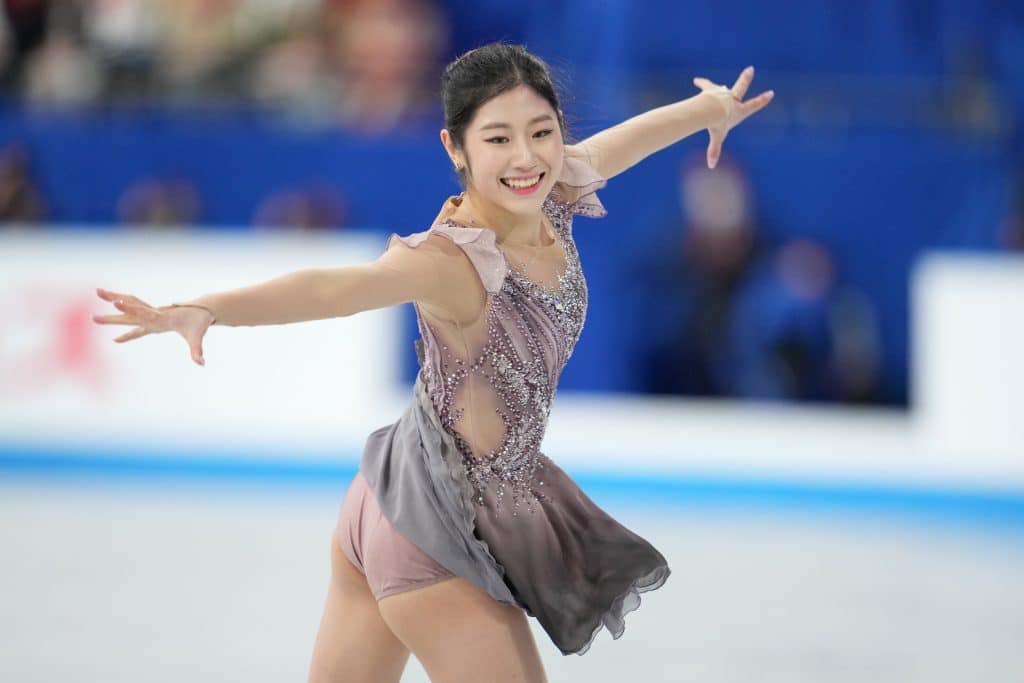
Yelim Kim skated to Max Richter’s ‘Mercy’ in the short program. Despite popping the toe-loop in the opening combination into a single, she recovered from the mistake and delivered a strong rest of the program, landing the double axel and triple flip with +0.71 and +1.51 GOE respectively. The fluidity and beautiful lines of her skating were evident in the performance, and she earned applause in her Ina Bauer out of the step sequence. Her free skate was to the music of ‘Summer of ‘42’, and she opened with a high-quality triple lutz-triple toeloop. The music complemented the grace and elegance of her style well, and she conveyed all the intricacies of the relatively quiet piece with mastery. She was secure in all of her jumps in Tokyo; apart from an under-rotation in the opening combination, it was a clean program with high grades of execution for most elements, and one which earned a season’s best score of 143.59 points.
Hyejin Cho and Steven Adcock, who teamed up just last year, had their first international outing at the competition. Their side-by-side triple salchows were landed successfully in their short program, as was the throw triple salchow, making for a solid performance. In their free skate to Rachmaninoff’s piano concerto, there was a fall on the side-by-side triple toeloop, and mistakes on their lasso lift were costly; however, the throw triple salchow was nailed, and their third lift was secure with good positions showcased. They had a great first set of performances in front of an international audience.
Hannah Lim and Ye Quan had their senior debut at the World Team Trophy and showed their strength as skaters. They emoted well towards the spectators in their rhythm dance, securing level fours in the opening twizzles, which were well-matched with each other and well-timed to the music. It was a clean skate from the two with a quality and level-four rotational lift to close the skate, and an emphatic finish. Their free dance was to ‘Danse Macabre’, and they captured the audience’s attention from the outset with their choreo spin move, which showed remarkable flexibility. They followed this up with a strong set of twizzles and got level fours on all the lifts. Lim and Quan are both great artists and their choreo step sequence was a highlight, allowing them to really shine as performers.
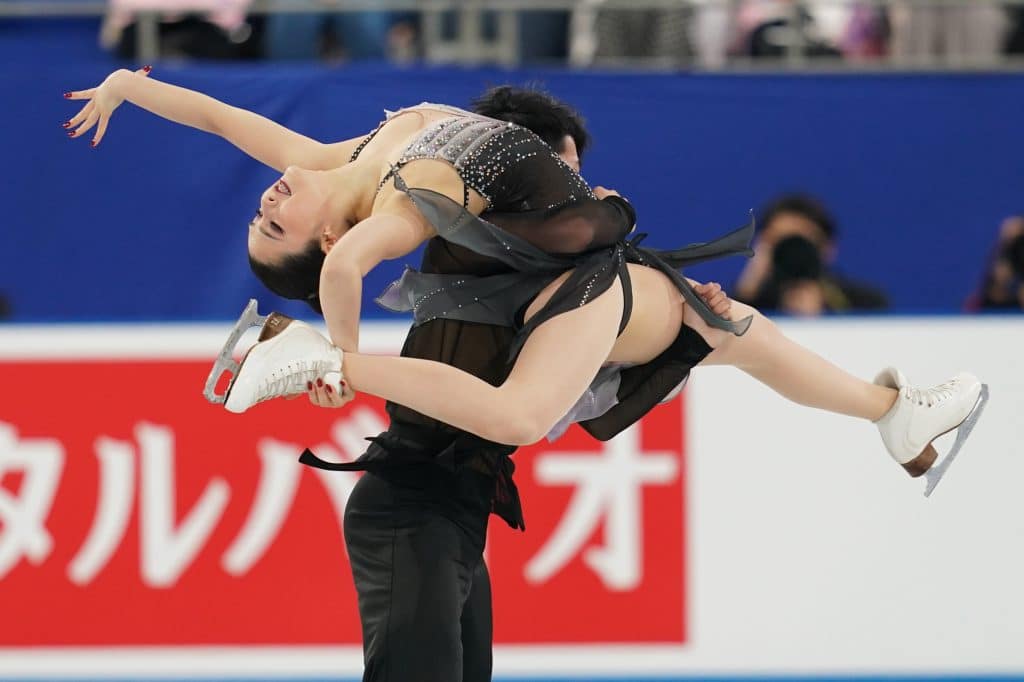
Team Japan
Shun Sato was eleventh in the short program, but came back stronger in the free skate to put down the eighth-highest scoring performance in the event. He fell on the quad lutz in his short program, and struggled to land the quad toe-double toe cleanly as well. Nonetheless, he nailed the triple axel, and picked up on the intricacies of ‘Carol of the Bells’, especially through his footwork. His free skate opened with a triple lutz, but he went for a second lutz jump and landed the quad lutz as his fourth jumping pass, albeit with a negative grade of execution. Sato has great musicality, grasping both the principal melody of ‘Red Violin’ and the percussive beats accompanying it.
Kazuki Tomono skated to ‘Happy Jazz’ in his short program: a difficult piece to deliver convincingly, but one that he conveys with charm and exuberance. He opened with a quality quad toe-triple toe combination, but fell on the subsequent quad salchow. He received level fours in all spins and a level three in the step sequence, with +1.27 GOE for this element. His free skate was to the overture of ‘Die Fledermaus’, and saw him nail two quad toeloops, with one of them in combination, and both with high grades of execution. He demonstrated noteworthy attention to the details of music and movement in the step sequence, effectively conveying the slower section of the piece. Whilst it was not a clean skate, with several jumping errors, Tomono nevertheless put out a strong performance and earned 164.55 points.
Reigning World champion Kaori Sakamoto was second in both the short and free programs. Skating to a Janet Jackson medley in the short program, she showed speed and distance on the opening double axel, with a GOE of +1.51. She fell on the triple toe-loop in her jump combination, but delivered a rousing and entertaining step sequence which was given a level four from the judges. Despite the mistake, she scored 72.69 points for the performance. Her free skate to Sia’s ‘Elastic Heart’ had her trademark incredible ice coverage; Sakamoto used her whole body to express the music, with large-scale and expansive movements. Whilst there was a fall on the triple-toe loop in her penultimate jumping pass, she nailed her final jump, the triple loop, with a +1.61 grade of execution.
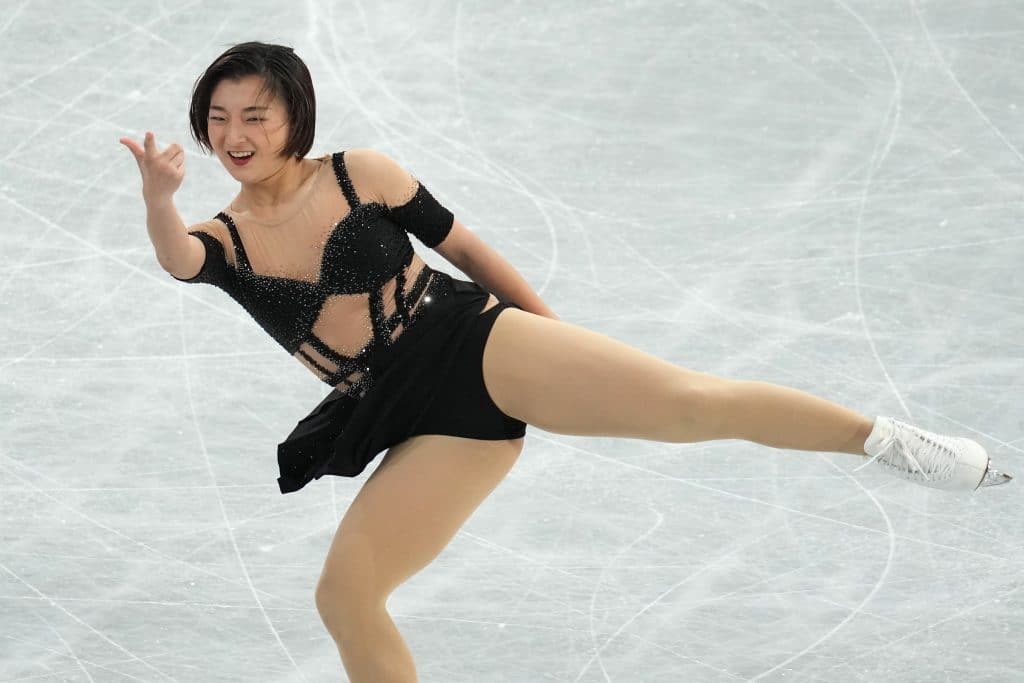
Mai Mihara skated with grace and flow to ‘Merry Christmas Mr Lawrence’, maintaining this through all the elements and integrating the jumps into the program’s wider choreography. She lost out on some points by doing a double lutz-triple toe combination instead of the planned triple-triple, but received level fours for all three spins and the step sequence. Her free skate was to ‘El Amor Brujo’, and she showed great musicality in her performance, using the combination spin to transition between the different tonalities of the piece. Although Mihara fell on the triple loop, which was her final jumping pass, and had under-rotations for three other jumps, she finished her skate with a top quality step sequence, followed by a great spiral in the choreo sequence, and both of these elements received high grades of execution.
Riku Miura and Ryuichi Kihara skated to ‘You’ll Never Walk Alone’ in their short program. Their lasso lift had both speed and flow and was given a level four and +2.50 GOE. The team nailed the throw triple lutz, which was landed on an emphatic moment in the music and served as a transition into the uplifting, rousing ending to their clean skate. In their free skate to the music of Sleeping at Last, they displayed amazing height on the opening triple twist, and matched the tone of the music with sensitivity and strength. Apart from a mistake on the side-by-side toeloops, the team amassed high grades of execution for all elements and scored 143.69 points overall.
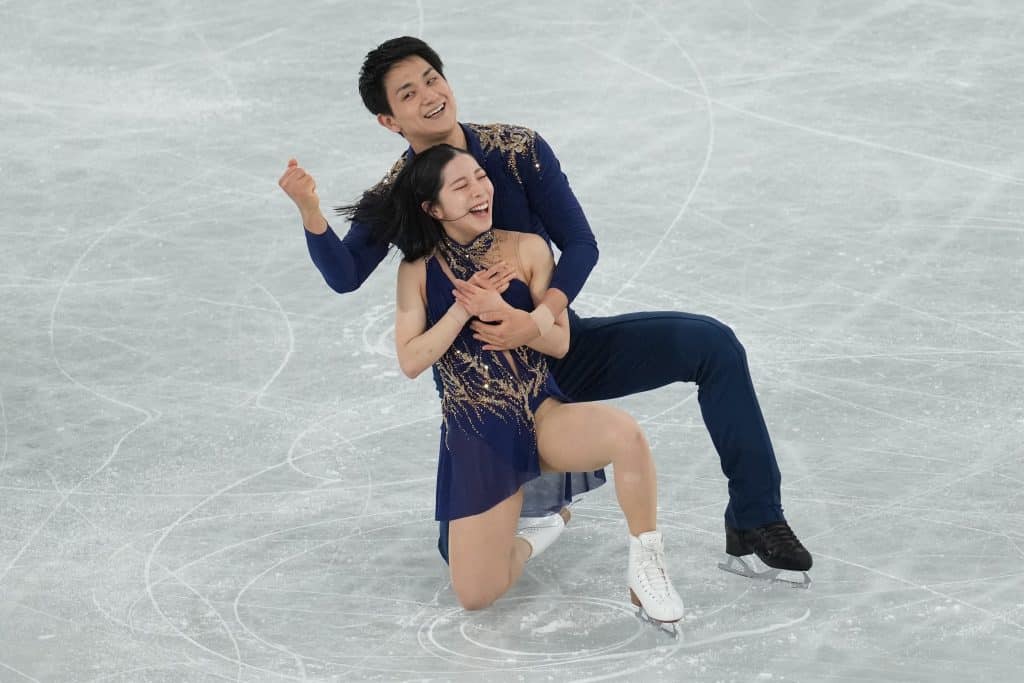
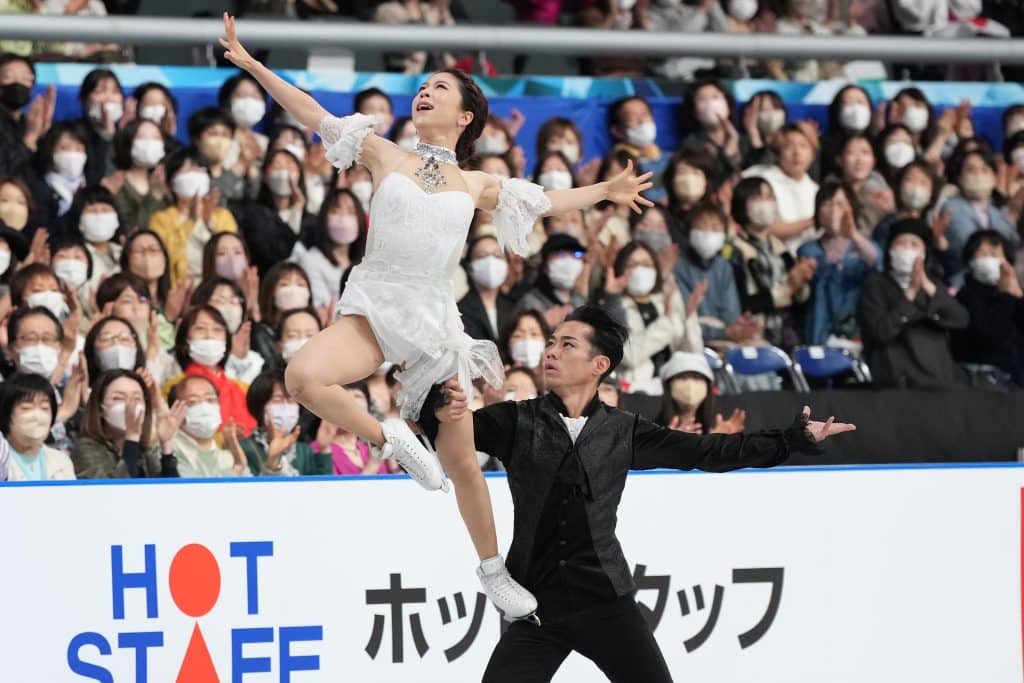
Kana Muramoto and Daisuke Takahashi’s rhythm dance started with an upbeat, energetic rhythm sequence, showing great interpretation of ‘Conga/Rhythm is Gonna Get You’. Their fast twizzles were given level fours and a +2.40 GOE. Although there was a slight error coming out of the pattern dance step sequence, they did not let it affect their focus and the quality of the rest of their performance; they ended with a great midline step and lift. In their free dance to ‘The Phantom of the Opera’, their lifts in the program’s opening had power and speed, and they kept this momentum into their twizzles. The team brought to life the intense ‘Phantom of the Opera’ theme and can express many emotions and tonalities within the space of one program, and even within the space of a single element. The crowd was with them the whole was through the clean skate, and they received a personal best of 116.63.
Team Italy
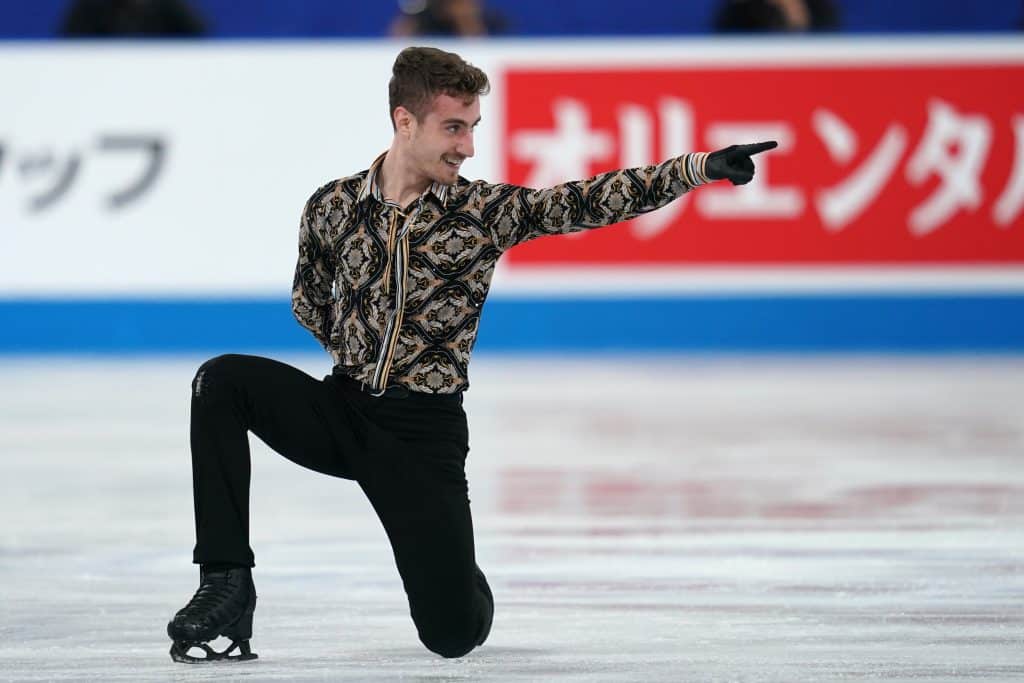
Matteo Rizzo’s Måneskin short program was an enjoyable performance as always; the change in tonality and expression between the two pieces of music were portrayed with great showmanship. He landed all three of his jumping passes, although he struggled with the quad loop, and it was under-rotated. His step sequence was given a level four and +1.56 GOE, and Rizzo interacted with the spectators throughout the element. His free skate was the second-highest scoring performance in the men’s event, less than half a point behind Junhwan Cha. Apart from a step out on the first triple axel, all his jumps were beautifully landed, and rewarded with good grades of execution. The effortless lyricism of his skating making him a standout skater, and it was a triumphant performance from the European silver medalist, that finished with an electric, level-four step sequence.
Daniel Grassl skated to ‘Silhouette’ in his short program, which was choreographed by fellow competitor Jason Brown. While the choreography hence pushes him both artistically and musically, and poses a new stylistic challenge to the skater, there is no doubt still much room for growth in these areas. Grassl landed all three of his jumping passes, the first two with positive grades of execution. He showed his trademark spin positions in the final spin, which was given a level four and +1.05 GOE. With 89.81 points, the performance was a season’s best. He landed a quad lutz in the opening of his free skate, also landing the subsequent quad loop, which made for a TES of 25.56 after the two elements. However, he popped the subsequent flip into a double, and had an under-rotation in the first axel. He received level fours for all three spins and the step sequence.
Lara Naki Gutmann had a stylish, suave short program to ‘Un Ano de Amor’, and landed her double loop-triple loop combination. Although she fell on the triple flip, she recovered well to deliver a double axel later. Her strong musicality was evident in both performances; her Hitchcock free skate is of a completely different tonality to her short program. It is an interesting and original approach to a FS, and one which she interpreted convincingly and with skill. It was a good skate, with only one element, the triple lutz, given a negative GOE, and level fours on all spins.
Anna Pezzetta captured the essence of Einaudi’s flowing and emotive instrumental pieces in her short program, opening with a triple lutz-triple toe of quality. She doubled the flip attempt, earning no points for the element, but delivered a good double axel afterwards, with great transitions into and out of the element. She furthermore showcased a passionate step sequence to the ‘Experience’ section of her program. Her free skate saw her nail the lutz-toe combination again, with noteworthy distance; Pezzetta goes into her jumps with a lot of power and strength and is an exciting skater to watch. Her musicality was evident in her interpretation of Vivaldi’s ‘Winter’ in the step sequence.
Sara Conti and Niccolo Macii showcased the top quality of their skating in both of their programs. The throw triple loop was landed with flow in the short program, and they emoted well towards the audience in their step sequence, with excellent musicality. However, they lost synchronisation in the final spin, which therefore lost out on levels and grades of execution, earning just 1.06 points for the element. In their ‘Cinema Paradiso’ free skate, the two had great side by side combination jumps, securely landing both. The beautiful lines of their skating were shown in the choreo sequence, which accompanied the instrumental section of the soundtrack. Although there was a fall on the throw triple salchow, this was the only element given a negative grade of execution, and they came third in the event.
World silver medalists Charlene Guignard and Marco Fabbri gave the crowd in Tokyo two clean and quality performances. In their rhythm dance, they had synchrony and speed in their twizzles, committing to each position within them with precision: the element was given level fours and +3.20 GOE. Not only are the two great athletes, but they are also great performers and got the crowd going in the choreo rhythm sequence. They earned a personal best of 90.90 points. Their free dance was a dark and intense program: although it is no doubt difficult to maintain such a tone for the length of a performance, the two pull the feat off effortlessly. Their lifts all had amazing control, with well-defined positions. Their choreo step sequence in the middle of their program perfectly matched the percussive beats of the music.
Team France
Kevin Aymoz brought Labrinth’s music to life in his short program to ‘Still Don’t Know My Name’ and ‘Nate Growing Up’. It was a clean program, with remarkable transitional content blending every element into each other. Aside from a quad toe-triple toe, he also nailed a triple axel with +2.86 GOE, landed on the beat of the music. The step sequence played to his performative strengths and charisma, showing attention to all the beats of ‘Nate Growing Up’, and including creative movements. He earned 100.58 for the program. His free skate encapsulates the narrative of ‘The Song of Achilles’, as told through the music of Hans Zimmer’s ‘Gladiator’. Although there was a hand down on his second quad toeloop, and a negative grade of execution on the 3A-2A sequence as well, it was another strong skate. The choreo sequence was a highlight as always, complementing the celebratory and expansive climax of the program.
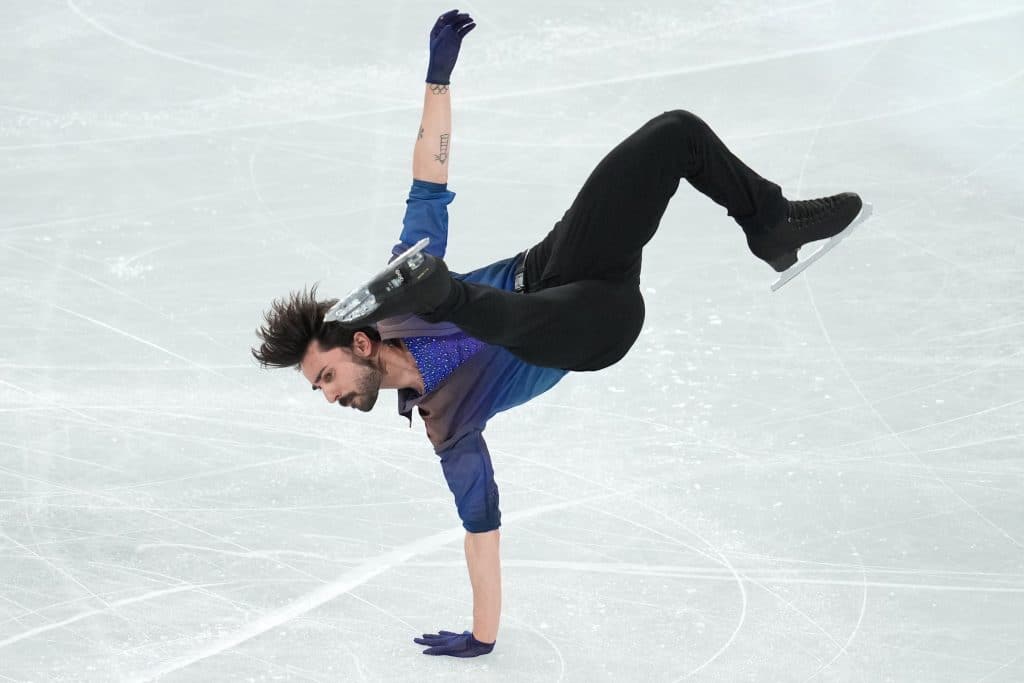
Adam Siao Him Fa showcased his qualities as an emotive and skilled storyteller in his two programs. He fell on the quad lutz attempt in his short program, but landed the next two jumping passes cleanly. He performed the choreography with passion, showing precision and dynamism in his movements, with increasing intensity in his skating over the course of the program to match that of the music. He struggled with his jumps in the free skate, with six of the seven jumps being given negative grades of execution. Despite these mistakes, however, his ability to present the audience with an emotive narrative, and use his body to convey the complexities of the choreography and music, shone through in his performance. The last three elements, the step and choreo sequences and the sit spin, enabled him to play to these strengths, and made for a climactic finish to the skate.
Lea Serna put out a clean short program, opening with intensity and delivering a double axel, triple flip- double toe and triple lutz. She had split-slide movement into one of her spins, which was given a level four. Although there was a brief loss of balance in the step sequence, it was otherwise a successful skate that was close to her personal best. She struggled to cleanly land the first two combinations in her free skate, but came back well in the next two jumping passes, and was more secure in the second half of her program. She emoted well in the step sequence, which was given a level four and a solid GOE of +0.95.
Lorine Schild landed her triple lutz-triple toe combination in the short program with a positive grade of execution, but struggled to land the triple loop cleanly. She connected well to the music choice of ‘In the End’, with a good range of movements shown in the step sequence. Her free tango-style free skate opened with a great triple salchow-triple toeloop combination. She had a strong combination spin with neat positions, given a level four; the two subsequent spins were also level fours, and were similarly of quality.
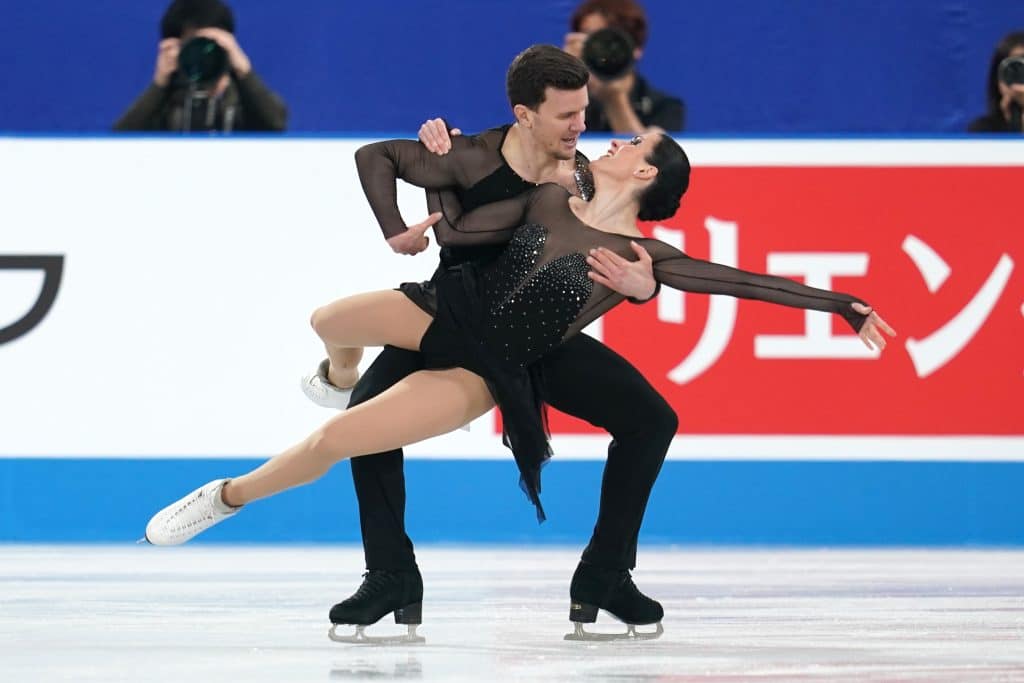
Camille Kovalev and Pavel Kovalev skated to a Billie Eilish medley in their short program, and received level fours for the lift, step sequence and final spin. They delivered a fun ending to the program accompanied by ‘Bad Guy’, using the step sequence to get the crowd going; the spins at the end of the performance were well matched with each other, and finished right with the end of the music. Skating to Florent Pagny’s rendition of ‘Caruso’ for their free skate, the two received level fours for three elements once more. Although there were several elements with negative grades of execution, and they received lower grades of execution for several other, it was nonetheless a solid skate, with both throw jumps and both side-by-side jumping passes landed.
Evgeniia Lopareva and Geoffrey Brissaud showed good attention to the accents of ‘Paxi Ni Ngongo’ in their fun choreo rhythm sequence that opened their rhythm dance. They secured level fours in the stationary lift and in the twizzles. They reflected the change of tempo from the first to second half of the skate with their movements and expressions. In their Edith Piaf free dance, they displayed exceptional speed through the rotational lift, following up with great twizzles: both elements received level fours. The program has a touching emotional range, and the team displayed wonderful sensitivity to the different pieces of music and used the straight-line lift as the passionate final element.
Team Canada
For Keegan Messing, the World Team Trophy was the final competition in his career. Skating to ‘Grace Kelly’ in his short program, he gave the audience a high-energy, upbeat performance, and covered the ice with speed, showcasing complex transitions and moves in his step sequence. Whilst he struggled with the opening toe loop, he landed the following two jumping passes with positive grades of execution. His free skate to ‘Home’ saw him open his final competitive skate with a quality quad toe-double toe, with his trademark speed and distance, as well as nonchalant style. The skate concluded an accomplished career for Messing.
Stephen Gogolev was unable to put out a clean short program in Tokyo, with errors on all three jumping passes, including missing out on a combination jump, and popping the axel into a single. Nevertheless, he secured level fours in all three spins, and delivered a passionate and dynamic step sequence as the penultimate element. He landed the opening quad toe-loop in the free skate, but popped several jumps thereafter. However, he was more solid in the second half of the skate, and worked well to transition into the quieter, softer middle section of the program following the first spin.
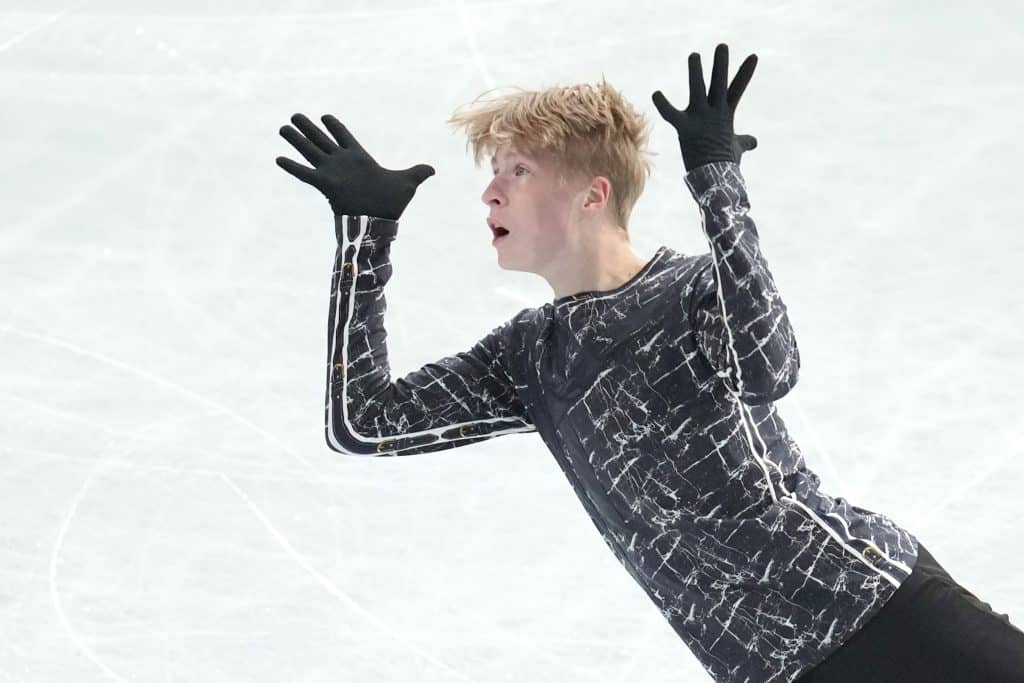
Madeline Schizas had a clean skate in her short program to ‘Black Swan’, with a season’s best of 69.76 points. She delivered a neat triple lutz-triple toe to open the program, following up with a triple loop and double axel. Schizas demonstrated a unique interpretation of what is a popular choice of music. In her ‘Madame Butterfly’ free skate, she struggled with the landings of her first two jumps and had difficulties with the second attempt of the triple loop, which was judged as downgraded. She had some more solid jumping passes, but she was overall held back by lower grades of execution; nonetheless, she secured level fours for all her spins.
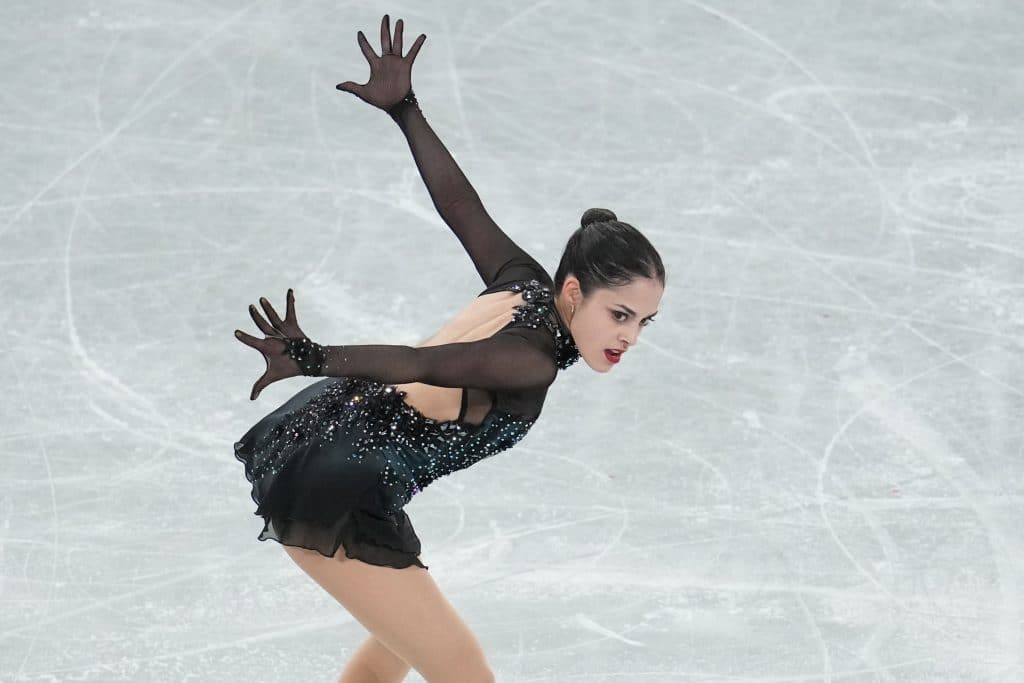
Sara-Maude Dupuis performed her short program to ‘Take the A Train’ and had great expression, grasping the music’s lively style and beats. She struggled with the lutz, with a hand down and -1.10 GOE, but landed the double axel solidly. The instrumental section of the piece was dedicated to the step sequence, and enabled her to show her musicality. In her free skate, she popped the opening lutz, and had a hard fall on the triple flip. Dupuis put out a stronger second half to the skate, with a level four final spin and an emphatic finish to the program.
Deanna Stellato-Dudek and Maxime Deschamps skated to ‘Oblivion’ in their short program, and had great height on the opening triple twist of the performance. With solid side-by-side triple toe loops and strong positions in their lasso lift, it was a great skate from the team, despite there being a -0.71 deduction for the throw triple loop. Their step sequence was rewarded a level four from the judges, and was well matched to the intense climax of the tango. They skated to a ‘Cleopatra’ program for their free skate. They struggled with their side-by-side jumping passes, and were unable to make their triple toe loop a successful combination. However, the two throw jumps, the salchow and the loop, were both delivered beautifully. The pair opted for a forward outside death spiral, which was given a level three and positive grade of execution.
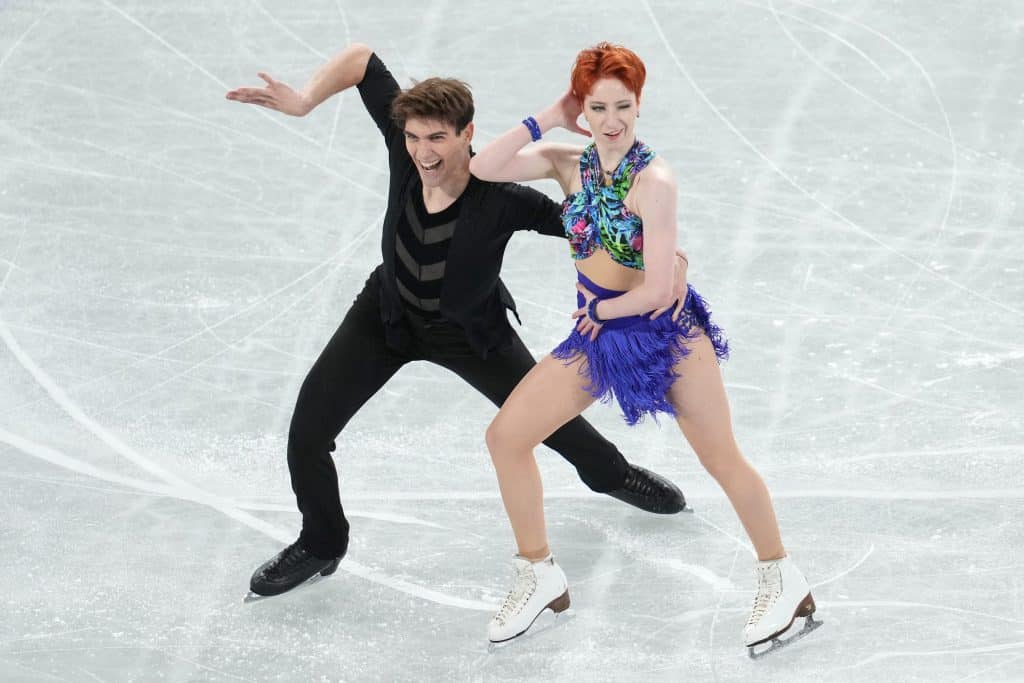
Piper Gilles and Paul Poirier, the World bronze medalists, had a fun rhythm dance to ‘Do What I Do’ and ‘Rhythm Only (Rumba 25)’. Although there was a slight waver in the twizzles, it was nonetheless a solid skate from the team which was third in the event. They interpreted the different sections of the program effectively, picking up on the changes in tempo and rhythm. Their ‘Evita’ free dance was a character-driven program, and Gilles and Poirier used the one foot turns to open the performance, and bring the audience into their narrative. They skated with feeling to ‘Don’t Cry for Me Argentina’ at the free dance’s climax; it was a clean skate for the team and they were given 128.48 points for it.