
The Technical Committee Chairs emphasized the goal of making rules easier for athletes and audiences to understand
On Friday October 16, the new leaders of the ISU Technical Committees for Singles, Pairs, and Ice Dance spoke to journalists for the first time. The Chairs explained the new rules in place for this season, and the goals of these changes. The session also gave a glimpse into how these leaders are approaching the future of each discipline.
Seeking balance between jumps and artistry

At the ISU Congress in June, Leena Laaksonen of Finland was elected without opposition as the new chair of the Singles and Pairs Committee. Laaksonen also served as a member of the committee during the last term.
That gives her some ownership over the changes for this season, which were originally approved by the ISU Congress in 2024.
For singles, the changes include one fewer jump in the free skate, and the substitution of a new choreographic spin for one of the leveled spins. As Laaksonen explained, these changes are intended to “give skaters more time to develop their choreography, and build connections between elements. This will reward not only exceptional jumps, but also the transitions, movement, and musical interpretation that bring a program together.”
Spins and steps are also worth slightly more this season. Other rule changes include allowing three-jump sequences with Eulers and restrictions on repeating the same kind of jumps.
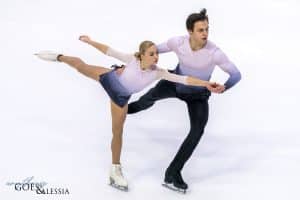
In pairs, the new choreographic pair spin and choreographic lift create “more opportunities for couples to be creative and make their programs their own,” Laaksonen continued. “These elements can bring different positions, movements, and memorable moments to the ice. Changes to jump combinations also place greater emphasis on quality and unison in pairs.”
At the end of last season, a few of the top men’s skaters expressed their opposition to the removal of one jump. Journalist Phil Hersh asked Laaksonen if this rule was intended to even the playing field between Ilia Malinin and the rest of the field.
Laaksonen disagreed, noting that there are still opportunities for good jumpers to show their skills. “When we changed the Euler rule that it’s no longer a listed jump, a skater is actually able to add one more jump into those jump combinations. So still the good jumpers are able to show all the different types of jumps and they are able to show all the quads if they like. So it’s not taking anything away from their skills. It’s just getting a little bit more freedom and more possibility to also show the artistry in the program. It is not a bad thing for the technical skaters. They can still demonstrate a lot of technical qualities in the program.”
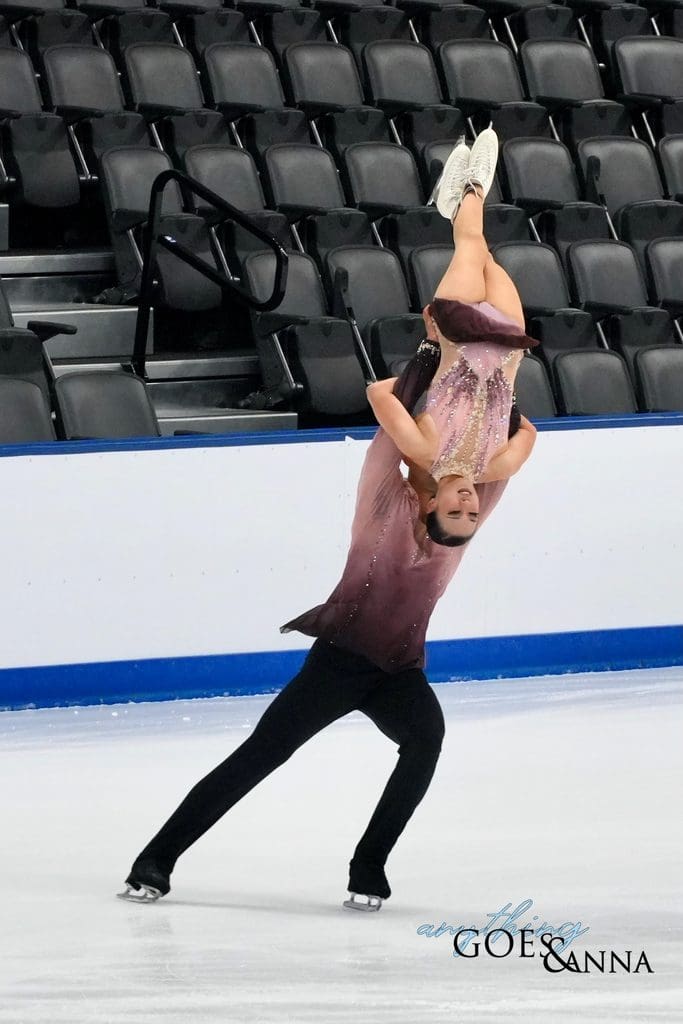
She emphasized, “We’re trying to think of the best possible ways to promote and to develop the sport, so that it really serves the whole skating community. So I wouldn’t say at all that it’s an ‘Ilia rule’ at all, that was not in our intention. It was to give more emphasis on the artistry, which was going a little bit backwards [because] only the jumps counted so much in the program. We also want to give more possibility for skaters that are very good performers and are able to really bring memorable moments for the audience. I really want to emphasize that a good skater is a full package of different skills.”
“Ultimately, we want technical difficulty and artistry to work together, not compete for space in a program. We want skaters to have the freedom, to show the full range of their abilities. And audiences to experience performances that are technically impressive, musically engaging and distinctive.”
Journalist Laurie Nealin asked Laaksonen if she is happy with the choreo elements she has seen so far.
“I’ve been discussing a lot in the camps during the summer with the coaches and skaters about [the choreo spin],” Laaksonen noted.
“It is a difficult element for them, in a way, because they’ve been used to doing a very technical spin so far with a lot of changes of position and difficult variations and so on. So they’ve been very concentrated on the difficulty part of the element. And now they have to think a little bit more about the quality and how you can make the spin go with the music. How can you change the position with the music and so on?”
“It is a new adventure also for the skaters, and I believe that, as the season goes on, and for next season, the skaters and coaches will have a better understanding of the essence of the element…So far, we’ve seen some very, very good choreo elements and some that are still in the process of getting there.”
For the pair elements, she also sees mixed success so far. “In the choreo lifts, I think the skaters have used this possibility quite well already….The choreo pairs spin, not so much yet. Very often it still looks a little bit like the old pair combination spin with some lifts inside the spin and so on. We hope it will evolve more, but the choreo pair lift is already looking quite a lot like what we envisioned it to be, and people are doing very different kinds of lifts.”
“That was the idea, that not everybody does exactly the same features and the same positions in the same way, but really there is more variety in between the different teams.”
A New Direction for Ice Dance

For this season, the membership of the Ice Dance Technical Committee has completely changed. At the ISU Congress, Michela Cesaro, an Italian ice dance judge, defeated the incumbent Shawn Rettstatt.
That vote was widely seen as a rejection of the recent direction of the discipline. In particular, many member federations were frustrated with rules that contributed to controversial judging decisions throughout the 2025/2026 season.
Given the mandate for change, it is especially interesting to see how Cesaro is approaching her new role. For the present season, however, Cesaro and committee must start by implementing the rule changes made by the previous committee.
These changes already included a return to more traditional ice dance, with the re-introduction of the pattern and key points to the Rhythm Dance. There is also a new element, the Creative Dance Element, in the Rhythm Dance, as well as rules intended to increase difficulty in twizzles.
Cesaro emphasized that these changes are just the start of making a stronger distinction between the two programs.
“Our vision is to bring ice dance closer to its ballroom roots, including the return of the pattern dance, and the key points in the senior as well. The aim is to give to the Rhythm Dance a clear identity, with a stronger emphasis on modern ballroom, and other dance styles. The Free Dance, in contrast, should remain the space for broader creativity, allowing couples to explore different styles, musical interpretations and storytelling. Our immediate priority has therefore been to define more clearly the identity, purpose, and content of each segment. This season marks the beginning of this journey, a long journey, with more significant steps planned for the next season.”
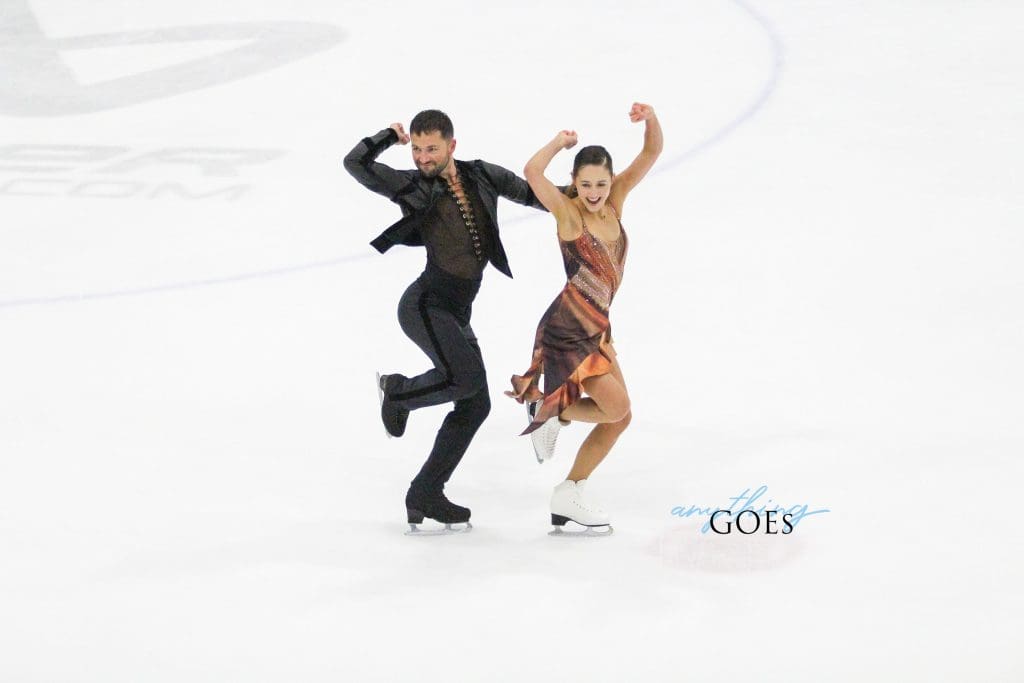
Beyond the technical changes, Cesaro named three overall goals for her committee. “The first is to simplify … the rules, making them easier to understand and apply. Second is to improve the consistency of evaluation by judges and technical panel across the competitions. And the third is to make ice dance easier for audiences to understand, including what makes an element difficult and why one performance receives a high mark compared to the other.”
How will they implement these goals? “First of all, rule development must go hand in hand with education. We have therefore developed an intensive educational program for judges, referees, and technical panel. Our ambition goes behind simply changing the rule. It is about the identity of each segment, which is very important in the ice dance, improving technical quality and consistency, and making our events more engaging and accessible.”
Cesaro pointed out that several tweaks have already been made to the rules in order to reduce the likelihood that a single technical call determines the result of a competition.
“I can understand, the public really didn’t understand why the result is like that. This is the reason that this season, we, [took] away something from the technical panel, and we give more power to the judges, because we have to underline the music, the rhythm, the tempo, and everything that is connected to the ice dance.”
“For the season, we started with the choreo elements, because we received some communication already in June. We decided for the choreo elements to remove the ‘attention’,” Cesaro explained, referencing the notorious exclamation mark that appeared on skaters’ protocol sheets at several key moments last season.
“Now we have a symbol,” Cesaro continued, “But it is really [only used for a] few problems, only if there is any error in the construction [of the program]. And we moved the power to the judges, so the judges can use +5/-5 [grades of execution].”
Improving clarity and communication
Both of the Committee chairs emphasized that they are looking for ways to make judging more consistent and comprehensible to audiences.
Laaksonen noted that new AI tools may help with explaining judging decisions to the skaters and the audience. “We have an experiment with Swiss Timing about the SmartVision, how to use AI more in the jump landings and possibly, in the future, in the step sequences and so on. So we would very much like to use these kind of graphics and visual impact, both on the screen, at the arena, but also to give more feedback to the skaters. So they could see, let’s say, okay, they got this feature in the spin versus the other one… because it is quite difficult to understand all the details…and including this kind of information in the protocols, I think, would benefit a lot of the skaters and coaches to understand where exactly they got their points.”
Would they consider a process for athletes to challenge a technical call or a score that they believe is incorrect?
“This has come up in our discussions internally,” Laaksonen responded. “Some people have suggested that, that there should be this possibility for the skater to challenge the opinion. We have to consult it more and we have to ask opinions more widely and to see how that could be implemented. Obviously there should be clear rules how to do it and how to implement it and so on. But definitely it’s an idea that we should be thinking about.”
The committees also plan to expand their engagement with athletes and coaches. “We’ve been really hoping and wishing for a long time to have this kind of a direct channel, to have more conversations with coaches and skaters. Now we are launching that very soon,” Laaksonen said, referring to a new platform through the ISU Events App.
“Of course, we’re also going to hold in every Grand Prix event an open house for the coaches and skaters,” Laaksonen continued. “They can drop in the room and talk with us and share their opinions on the current rules and what they would like to see in the future. Then going towards the championships, we hope to have even more communication with them. And maybe something at the beginning of next season for the coaches and skaters globally, a seminar interaction with us so that it’s clear what the rules are and the big picture of the changes, and we can hear their opinions.”
Read More:
New Head of Officials Promises Quality, Consistency