



In May this year, Canadian ice dancer Marjorie Lajoie announced the end of her 15-year partnership with Zachary Lagha, after the two had finished 10th at the Olympic Games.
Some two years prior, British-American ice dancer Jean-Luc Baker had taken a step back from competing, and shifted his attention to working as a choreographer.
In June 2026, the two skaters announced that they would be teaming up and representing Canada from the 2026-27 season.
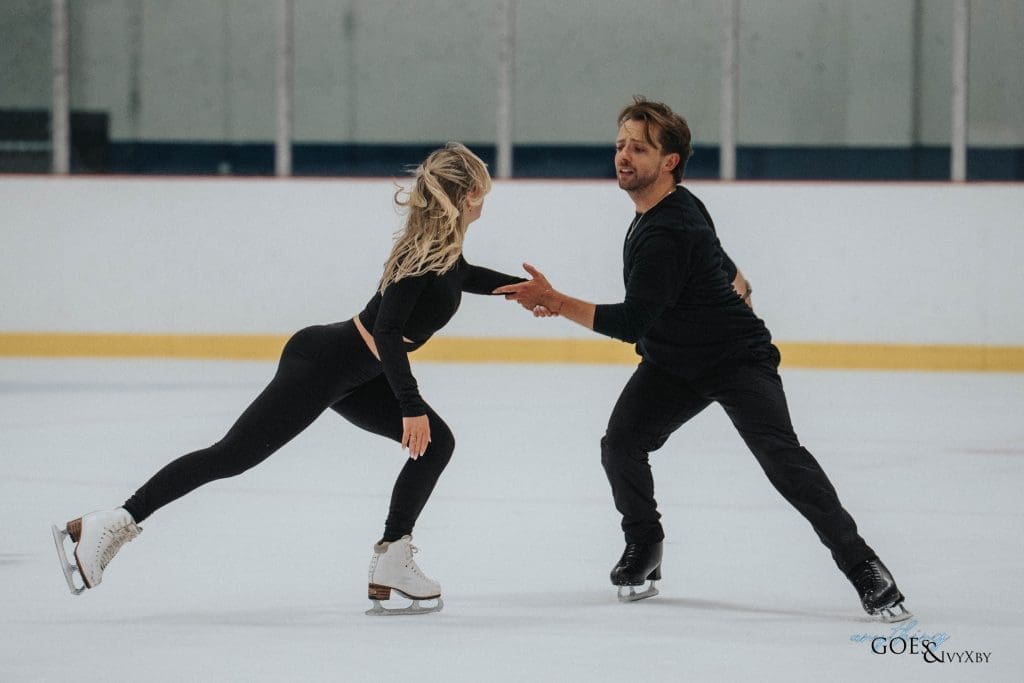
“I missed it [skating] from the moment that I stopped,” Baker said. “It was so amazing for me to be able to coach and choreograph alongside so many amazing skaters here at the Ice Academy of Montreal. And I worked a lot throughout the world, choreographing for some of the best dance teams and skaters that I know of.”
Yet, “it was always kind of deep down inside of me that I really missed the feeling of freedom that I get from skating, the connection with myself on such a deep level, helping me express emotions I don’t know how to put into words. But then being able to share that experience with a partner is a whole new world. And then on top of that, being able to connect with so many people in an arena.”
In fact, despite stepping away from competitions for a few years, he revealed that “I knew in the back of my mind that I still had it inside of me to give back to the sport a little bit more.”
But this desire hadn’t been without its difficulties: “I didn’t really know how to make that come to reality, because the… My last partnership, we stopped skating, and I’m obviously not the tallest skater in the world, so there’s not many opportunities for me to be able to connect with somebody. So it needed to be something that made sense for me.”
The move to skate with Lajoie, however, was relatively straightforward. “Marie-France [Dubreuil] just came to me at the beginning of May. I made one joke: oh, I would even skate for that country. And she’s like, you would still skate? And then I said, yeah. And then the next day, she said, what do you think about skating for Canada?” His response? “I mean, I would still skate for another country, absolutely. I skated for the US, I’m British, working on getting Canadian citizenship.”
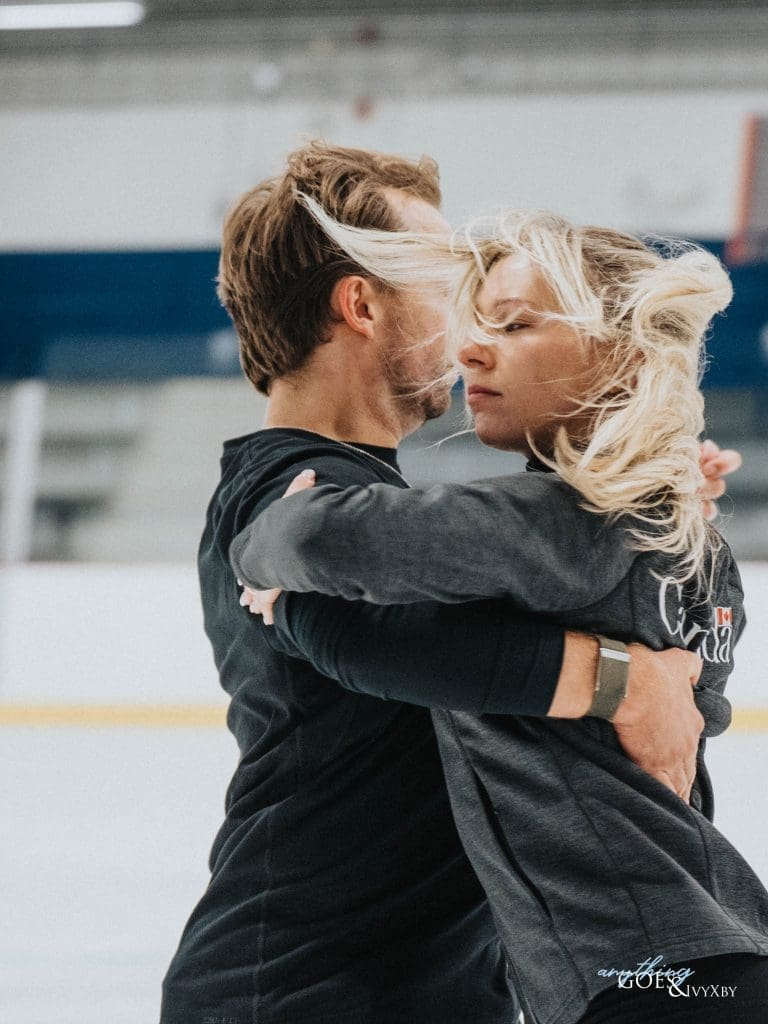
However, the shift back to skating competitively was physically challenging, and needed patience. “In terms of cardio, it’s a totally different beast, but I’m learning, and I’m not being too aggressive in terms of making sure I’m in this perfect shape straight away. It’s really important that I build the right foundations to make sure injury prevention is there and I’m not like, I need to look competitive right now. For me, it’s really important that I’m just in a position to build a really strong foundation for Marjorie and I, so we can do the things that we want both competitively and artistically.”
He stressed the importance of having a strong partnership, highlighting the fact that the audience “only really see[s] the final product. Sometimes the final product is amazing, and sometimes it’s not. But most of the time what we do here – it’s not that amazing until we can get it to that final product. And to be able to endure those discomforts and being able to communicate with somebody, and find the light in the darkness, [it’s] really hard to be able to find that with somebody.”
He has, however, found that “somebody” in Lajoie, singing praises of her character inside and outside of skating. “Everyone knows how amazing Marjo is. She’s like a little ray of sunshine. And it’s just so much fun to be able to share what I love with someone that’s so emotionally intelligent and willing to explore deeper inside of themselves and also become a better skater.”
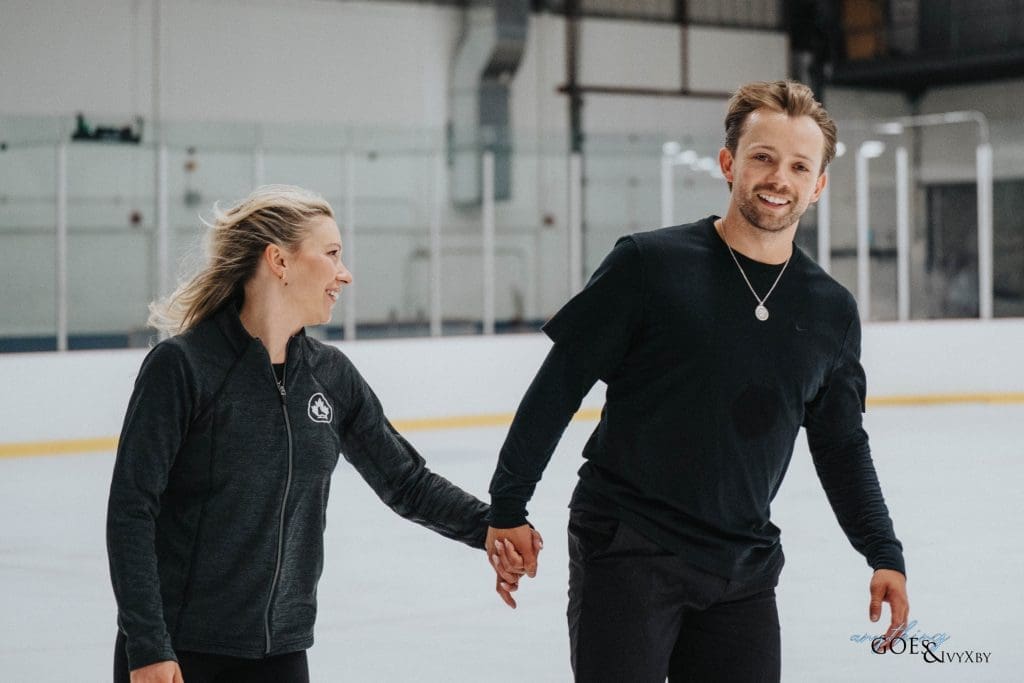
Lajoie also sang praises of her new partner. “I knew him, but from further away, and just being more in his bubble and being together – it’s amazing. We get along so well, and we started to know each other very well too, because he’s so good at communicating. So I think it’s just a privilege to be a partner now.”
Earlier this year, Baker announced his engagement to fellow ice-dancer Olivia Smart, during the 2026 Winter Olympics. Asked how he felt about competing against her, he was enthusiastic, looking at it as just one part of the bigger picture and timeline of their relationship. “I mean, I love it. I love it. We’ve definitely had some conversations at home about it, and it’s going to be a process for our relationship in a great way. Everyone, even at the Olympics, was like, heated rivalry. I was like, oh man, this is just the narrative that we live under, especially now that I’m coming back to compete. I think it’s amazing. She’s been my best friend for 14 years. I went to the last Olympics in 2022 [with her] as my best friend. And that’s when I told her I loved her. And I proposed to her at this last Olympics when she competed, four years later to the date that I told her that I was in love with her. And now we get to both do what we love together.”
“So I mean, just like every relationship, it’s going to have its ups and downs. And we’re really willing to work through everything to get to where we are now, where we worked to get there. And I think that being able to compete against each other, we’re going to have so much fun. We’re also so highly competitive ourselves, and so are they [Smart and Tim Dieck]. And out there, you’re alone. So I want the best for them, as I know they want the best for us. The moment we step on the bus at that competition to go to the event or to go to practice, it’s about Marjo and I. We’re in our bubble, and then we can live our lives outside of that. But it’s important that we just stay connected and we’re locked in together because that’s how we can create the moments that we have.”
Despite the shift in his attention to skating competitively once more, Baker hasn’t stepped fully away from choreography. “The hat that I’m trying to wear more of is the skater,” he noted. “I did do choreography this season. I did the French [ice dancers] Loïcia [Demougeot] and Théo [le Mercier], who will be at NHK with us. I did Aleksandr Selevko most recently. I did Marin [Honda] and Shoma [Uno]’s free dance.”
“But I have a short time for when I can allow my body to be locked in for this sport. And I’m really trying to prioritize that. In the future, over the next couple of years, I will still love to do choreography. But as of right now, hopefully and thankfully, my schedule is slowing down so we can finally put more energy into this. Because we started and we’ve probably skated a total of 3 weeks together in the last two months. It might be super weird at NHK because I’ll be like, okay, I did that program. But it’s fine. It’s fine because it’s so cool. And I just want to create with Marjorie and anyone else that wants to create with me. I love just giving them the opportunity to be themselves through their movement on the ice.”
Whilst Lajoie and Baker haven’t announced their programs yet, Lajoie provided a sneak peek, saying that for “the rhythm dance, we want people to be able to have fun with us. We want to connect together, but with the crowd. And we want people to dance while they’re sitting and just have fun. And for the free, we want them to just see and go into our world. We connect together. There’s just us on the ice. And we create a moment where they’re just watching.”
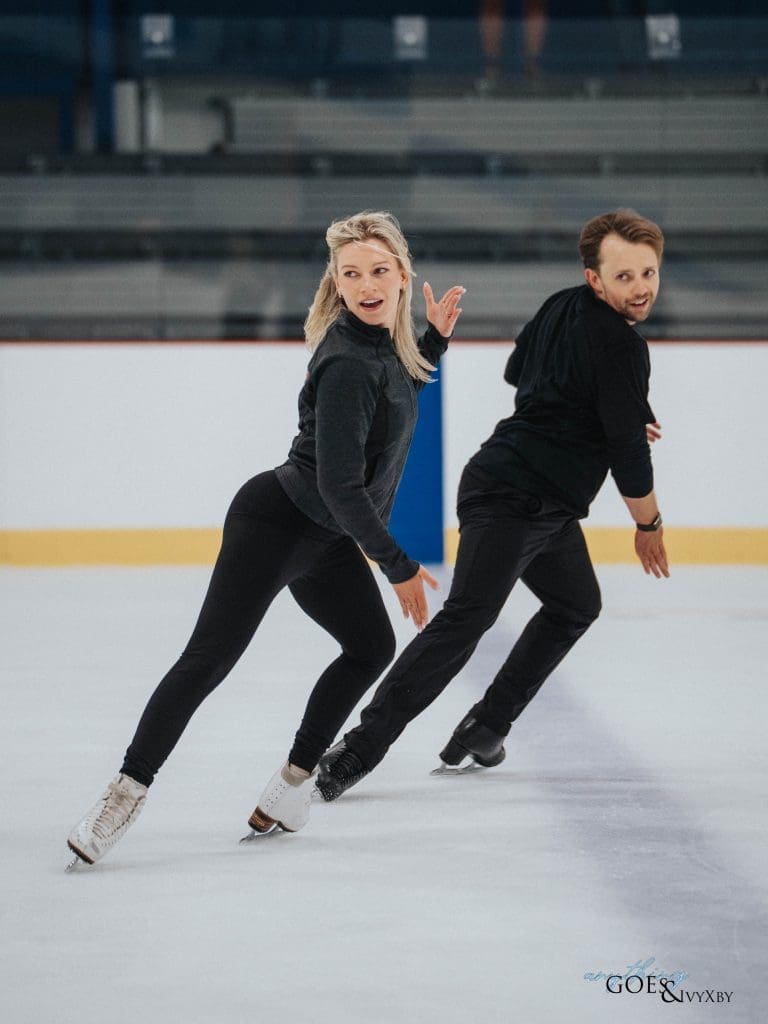
The two had thoughts to share regarding the golden waltz, which will be the set rhythm dance pattern this season. Lajoie described it as “a good challenge. It’s fun. It’s good, we love it. I think it’s nice. It’s technical.”
Baker went into more detail about the difficulty of the compulsory dance. “[It] is probably, to be honest with you, one of the hardest ones you could be given. I’m super grateful that the ISU decided to implement this because it’s very hard and it exposes a lot. Obviously we’re a brand new team, but you’re going to see teams struggle.”
“And the problem with this is that there’s going to be so much comparison to what Tessa [Virtue] and Scott [Moir] did, of their compulsory dance, and that’s their baseline. Obviously, Tessa and Scott are literally the most decorated or some of the best skaters of all time. But on top of that, their generation trained compulsories day in, day out. So from an outside (fan’s) perspective, [or] even some of the judges that judge those compulsories will be expecting to see that. What we’re judged on now is not that. We’re judged on key points and levels, and then also having individuality, but they want it to be the same but different.”
What might audiences expect to see this season, then?
“You’re going to see a lot of different interpretations of what the pattern can look like, because it is an optional pattern. You’re going to see a lot of interpretations of the way it’s skated, the leans, the rise and falls. And I think that’s really cool, but there will be a culture shock for the first couple months up until maybe the last Grand Prix – until people realize that everyone has a different interpretation of what this pattern can be like, because of the judges and how it interacts with the program … the GOE is going to be what they want to do regardless, but last season, you could see a team get a level two or level three on a PST, [and] it changed their placement dramatically. So there’s a lot of interest in how they create a higher technical standpoint.”
In fact, considering the technical difficulty of the golden waltz, “you’re going to see teams that don’t have the time to level up, find ways to finesse it… There isn’t a right option. You’re going to have the one side of the room be like, it needs to stay authentic, don’t change the holds, don’t change the pattern, and the other side of the room say, let’s be creative. I want to see different things. Let’s see it flow differently. How do you interpret something? And then we can kind of explore there. So I think that everyone’s going to be upset and everyone’s going to love it.”
Ultimately, though, “as long as we love what we’re doing, I think that’s what matters most.”
The team has been assigned to the NHK Trophy event of the Grand Prix series, which will take place in Tokyo at the end of November. Lajoie’s excitement was palpable: “In Japan, that’s going to be amazing. We’re really happy for the opportunity. We can’t wait to create and show the world what we can do together. I think it’s so fun, and we feel very lucky and grateful that the first year we’re skating together, we’re going to go to Japan and compete internationally.”
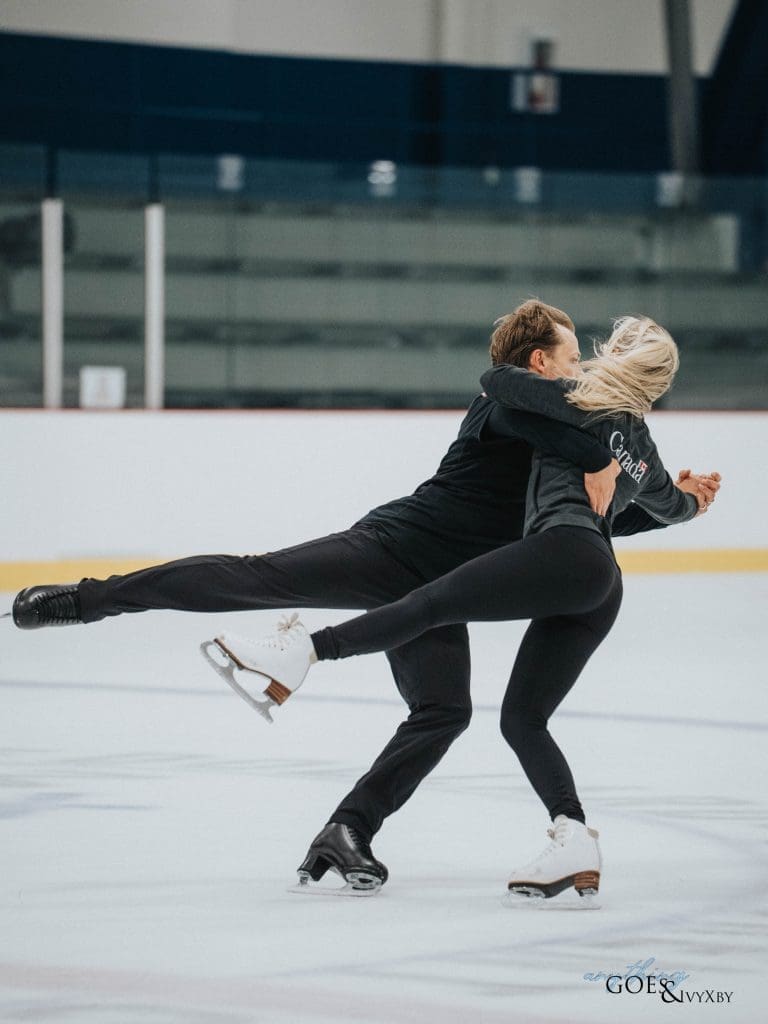
Despite Baker’s hiatus from competing, they remain levelheaded and realistic about their approach this season. “I don’t feel rushed,” he said. “We have two choices. We can either freak out and be like, I haven’t competed in 3 1/2 years, or we can acknowledge that I haven’t competed in 3 1/2 years. It’s going to take some time for us to get to that point. By the time we get to NHK, will we be the best? Maybe. We don’t know. But that’s so far away for us to be looking. Our plan is to be ready for that event,” he continued, adding that they would probably do a competition at the end of October as part of their preparation.
Short term, their approach is to “be smart,” Lajoie underlined. “We’re getting back in shape. We want to prevent injury and just feel comfortable with each other, build programs that we like.”
Baker added that they have bigger goals in the longer term. “We definitely want to win National Championships this year. I mean, we would love to be on a Four Continents podium. We want to be in the top 8 at Worlds, because we really want to give ourselves and also other athletes for the future an opportunity to be competing at a high level in ice dance. We have some amazing teams. What we can do is just focus on the rebuild of me coming back to competitive skating, creating moments together, and then trying to just keep Canadian ice dance on the map.”
Beyond that, however, they are looking at their partnership as the first year of a new Olympic cycle: “This is a four-year cycle that we’re working under, and we want to be able to grow and push ice dance in Canada and keep it on the top of the world stage over the next four years. So we know that’s not a “right now” kind of thing. We need to grow progressively.”