
*Originally published in February 2022. Updated in February 2026 for the Milano Cortina Olympics.
Watching figure skating for the first time? Want a quick refresher on how scoring works? Forgot what certain elements are called?
Then look no further! Here’s your quick guide to learn about figure skating:
What is Figure Skating?
Figure skating is broken down into three disciplines: singles – which is then split into men’s and women’s, pairs and ice dance.
Skaters compete with two programs. The first is called the Short Program for singles and pairs and for ice dance, Rhythm Dance. The second for singles and pairs is called the Free Program, and the Free Dance for ice dance.
Following the judging controversy at the 2002 Olympics, the ISU replaced the 6.0 scoring system with the IJS (International Judging System).
In 2014, the Team Event was introduced which is competed in two parts, the qualification and finals. A total of ten countries qualify based on the amount points earned at a combination of previous events. The skaters/teams selected then perform their short program/rhythm dance, the highest-scoring performance earns 10 points. The rest of the points are awarded in descending order with the last place earning 1. After all countries have performed, the five countries with the highest score proceed to the final part where they perform the free program/free dance, then the top three teams with the highest scores earn their relevant place on the podium.
How does the scoring work?
Each score is broken down and judged on two sections, the Technical Element Score (TES) and the Program Component Score (PCS).
The Technical Element Score is used to grade elements: jumps, spins, lifts, twists, throws etc. Each element has a Base Value which the judges then score on a scale of -5 to +5 based on how the element was executed. The Total Element Score is the sum of all the base value, level awarded, and GOEs.
The Program Component Score is judged in 3 categories: Composition, Presentation, and Skating Skills.. Each judge can give up to 10.00 points for the individual categories. For a full detailed breakdown of calculating scoring and how to read a protocol, check out our post here.
How did skaters qualify for the Olympics?
Each discipline has a limited amount of entries. Both Men and Women have 29 entries each, Pairs has 19 and Ice Dance has 23.
At the 2025 World Championships 24 Men, 24 Women, 16 Pairs teams and 19 Ice Dance teams qualified Olympic spots for their countries. The remainder (5 Men, 5 Women, 3 Pairs teams and 4 Ice Dance teams) were decided at the Skate to Milano Qualifier in September. However some countries that qualified quotas had to pass on them:
– Uzbekistan Pairs team Ekaterina Geynish/Dmitrii Chigirev split after the World Championships due to Chigirev having an injury. There wasn’t a second team with the required technical minimums to qualify for the Olympics. This quota was reallocated to France.
– In Ice Dance, Finland originally qualified two ice dance quotas however, there wasn’t a second team that met the citizenship requirements, so this spot was reallocated to Sweden.
What do I need to know about the disciplines?
Singles
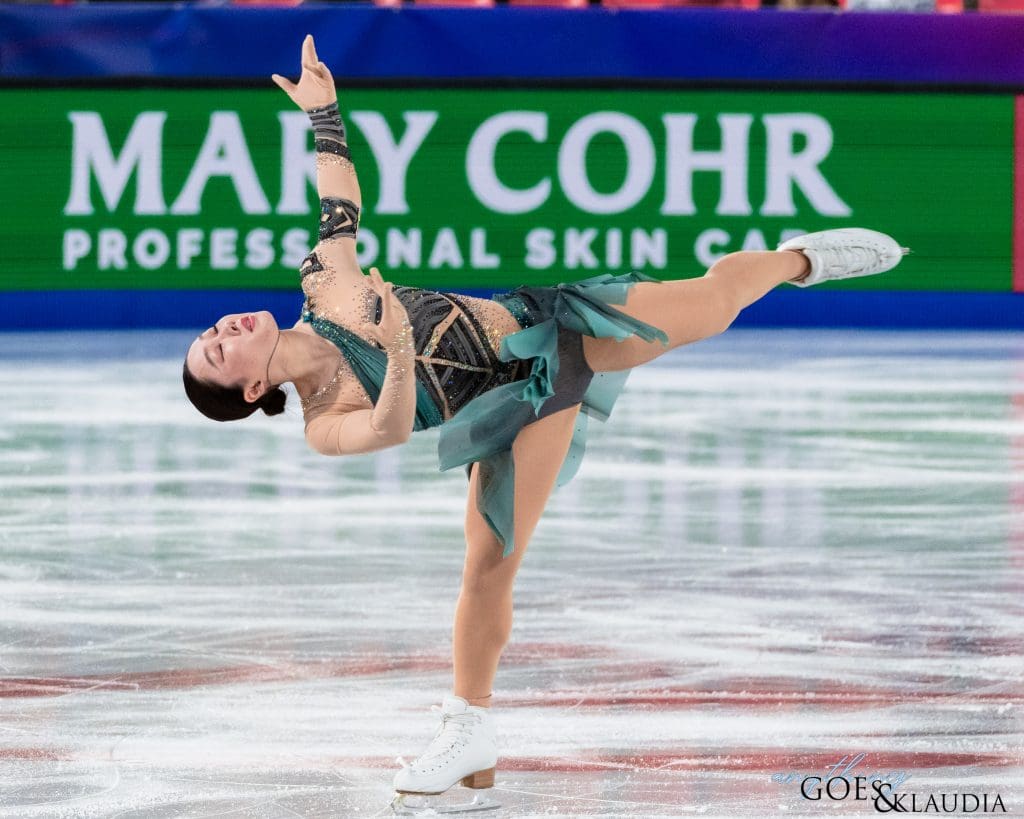
The main two elements that make up a singles program are jumps and spins.
Jumps are differentiated by their take-off and landing legs and edges.
Axel (A) – Notable for being the only jump that has a forward take-off. The jump should take off on an outside edge and land on the outside edge of the opposite foot.
Flip (F) – The flip takes off backwards from an inside edge, and is landed on the outside edge of the opposite foot. It’s also one of three toe jumps, which is where the toe-pick of the other foot assists with the take-off.
Loop (Lo) – The loop takes off on an outside edge and lands on an outside edge, on the same foot.
Lutz (Lz) – The lutz is another toe-pick assisted jump. A clean lutz takes off from an outside edge and lands on the outside edge of the opposite foot.
Salchow (S) – The Salchow takes off from an inside edge and is landed on the outside edge of the opposite foot.
Toe-loop (T) – The toe-loop is the third toe-pick assisted jump, which starts on the outside edge and is landed on the outside edge of the same foot.
Euler [oy-luh] (Eu) – The Euler (also known as half-loop), is a half rotation jump seen in combination jumps to assist the skater switch edges. It takes off from an outside edge and lands on the inside edge of the opposite foot.
There are three basic spin positions: camel, sit and upright, and within those many variations. For a more detailed explanation on spins, you can click here.
Pairs
The key elements that make the pairs discipline stand out are the throw jumps, twists, lifts and death spiral. (Despite the names and descriptions which may make the discipline sound scary, it’s one of the most interesting to watch!)
The ISU’s defines pair elements by the gender of the person executing them, however we’ve renamed these roles as ‘the thrower’ and ‘the lander’ as consideration for non-binary athletes competing in the discipline. For explicit purposes, we’ll state now by ISU rules, the “female” partner is not allowed to throw the “male” partner.
Throw Jump: This is when the the thrower, throws the lander into the air and they rotate the required number of times for their chosen jump, and lands unassisted. Any of the six main jumps can be performed as a throw.
Death Spiral: The death spiral is a type of spin, where the thrower is bent low on the ice in a pivot position and holding one hand of the lander, whose body is parallel to the ice and they spiral.
Twists: A twist lift is when the lander is thrown into the air, completes a number of revolutions with their body horizontal to the ice (most teams compete with a triple twist), and the thrower catches them by the waist.
Lifts: There are five groups of pair lifts, numbered one to five and each ‘group’ increases in the level of difficulty. Pairs lifts are notable by the ‘over the head’ position.
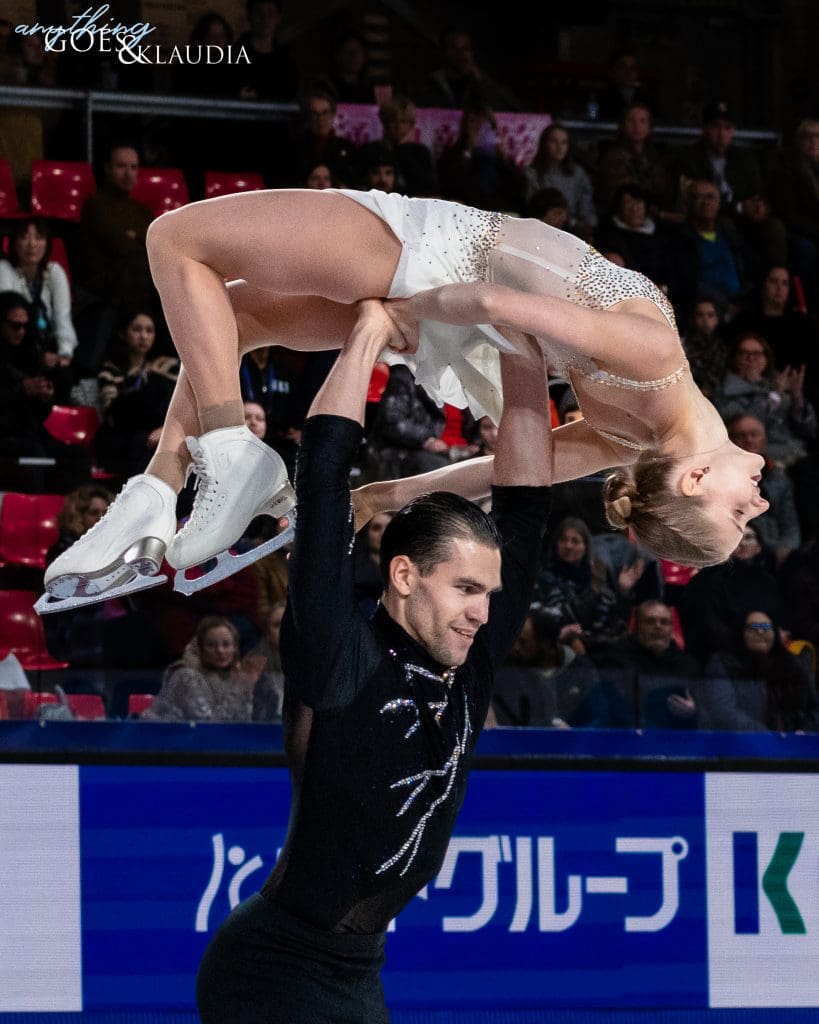
Like in singles, pairs also have jumping elements. These are done side by side and must be executed the same or they will be marked down.
Pairs also have spin elements, in the short program these are also done side by side and in the free program they’re done in a combined position.
Ice Dance (Updated in 2026)
Unlike the other two disciplines, ice dance doesn’t have any jumps. The two programs that are performed are known as the Rhythm Dance and Free Dance.
Rhythm Dance:
There are five required elements in the rhythm dance — 1 set of twizzles, a step sequence, a pattern dance step, a lift, and a choreographic rhythm sequence.
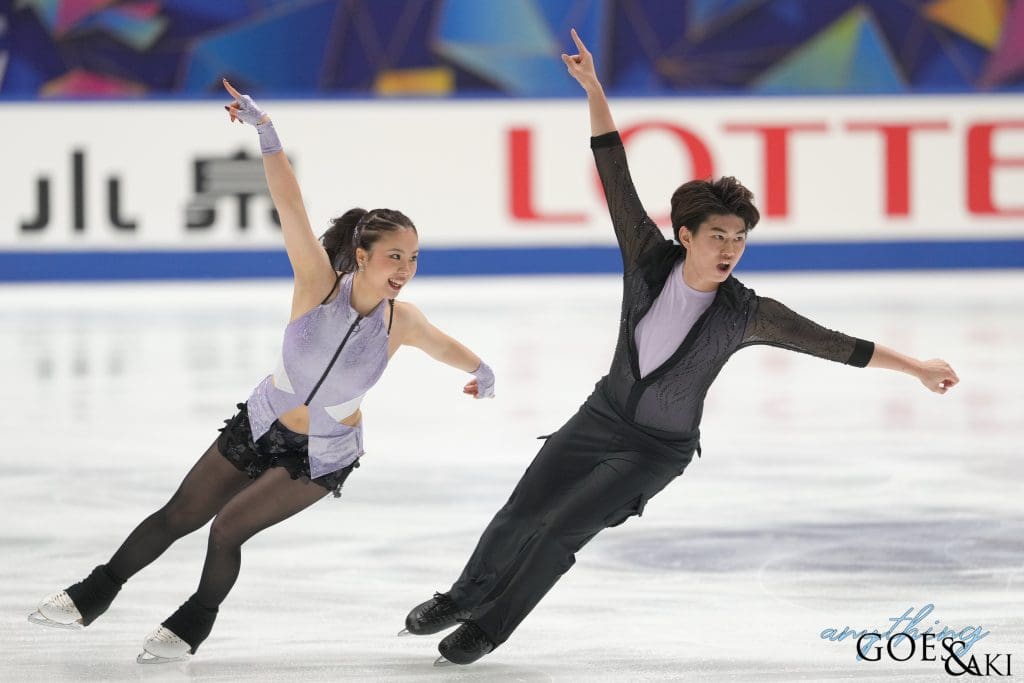
Step Sequence (MiSt or DiSt): This takes place across the long axis of the rink and will either be a Midline or Diagonal Step (the difference is where on the ice the entry for the element is, in the middle or on the diagonal going corner to corner). Partners are not allowed to touch during this element but have to remain close together for a good GOE.
Twizzles: Twizzles are a series of rotations that occur on one foot travelling across the ice. Each set will be different based on arm or leg positions, and a good set of twizzles will be done in sync. In the rhythm dance there can be two sets, but in the free there must be three. Both partners are graded on their twizzles individually.
Pattern Dance Type Step Sequence (PSt): Is a step sequence made up of difficult turns that begins with a turns movement crossing the short axis on the judges side of the rink. The first rotation of this must be face to face. The PSt ends with both skaters performing a helicopter type movement — the same idea as a turn but both partners free legs must be extended and at a 45 degree (or higher) angle above the ice.
Lifts: There are four types of lifts in ice dance, Stationary, Straight line, Curve and Rotational. Only one can be done in the rhythm dance.
Choreographic Rhythm Sequence: This element is notable by its placement across the short axis of the rink (think of it as starting from the boards opposite the judges and ending right in front of the judges). This element must start and end as close to the boards as possible and fit a number of criteria including both partners being in contact with the exception of one separation (for no more than 2 arm lengths and no longer than 5 seconds).
Free Dance:
The free dance doesn’t have pattern dance elements but there are ten required elements to execute, including three lifts, or one combination and one solo lift, twizzles, a step sequence in hold, a dance spin, one foot step sequence and 3 choreographic elements.
Choreographic Elements:
In a free dance, senior ice dancers can include any of 3 choreographic elements from below:
The Choreographic Character Step Sequence (ChSt1) can be performed at any point during the program and can be either in hold or not touching. It has to be placed within 10 metres either side of the short axis and must go from one barrier to the other. The permitted distance between partners is a maximum of 4 arms lengths apart (or 4 metres) and is also one of two moves where touching the ice with hands is allowed.
A Choreographic Lift (ChLi1) is a dance lift that has to be held for a minimum of 3 seconds, and a maximum of 10. It has to be performed after the other required lifts.
A Choreographic Spinning Movement (ChSp1) can be performed at any point during the free and both partners have to perform at least 2 continuous rotations in any hold.
A Choreographic Twizzling Movement (ChTw1) has to be performed after the required twizzles.
A Choreographic Sliding Movement (ChSl1) is an element where both partners perform a controlled sliding movement on the ice, at the same time, and it can be anywhere in the program. The move can be in hold, not touching or a combination of both.
Choreographic Assisted Jump/Lifting Movement (ChAJ1) is a series of at least three assisted jumping or mini lifts in a row, with a maximum of three steps between each lift.
Choreographic Hydroblading Movement (ChHy1) is where at least one partner’s upper body is almost parallel to the ice in a continuous movement. No other body parts besides their skates are allowed to touch the ice.
Is there more skating after the Olympics?
Yes! The skating season runs from August to March/April, even during the Olympics there are other competitions going on.
The next two major events this season are Junior World Championships, which are scheduled for March 3rd-8th , and the Senior World Championships, which are due to be held in Prague, Czechia, from March 24th-29th.
You can follow our Twitter for all the latest competition information, streaming links and results.