


After athlete complaints, ISU to review dance event
The International Skating Union (ISU) is looking into the ice dance event at last week’s Finlandia Trophy after a rare outcry from athletes and coaches.
In a statement to AnythingGOEs, an ISU spokesperson wrote on November 27th, that the governing body is “undertaking a review following inquiries received about the ice dance event at the ISU Figure Grand Prix Finlandia Trophy.”
What led to this extraordinary review?
The final Grand Prix event of the season had a technical panel that was unusually harsh nearly across the board. Few skaters got above a level 1 (out of 4) on their step sequences – and this included some of the best skaters in the world, who were expecting level 3 or 4. In addition, several skaters had choreographic elements called with a “!” on the protocol sheet, meaning said element didn’t satisfy the requirements, and one team event even had an element miscalled (despite it being the same at a previous event and being submitted on a planned protocol before the event).
Panels can vary in how they interpret the rules, and some callers are stricter than others; however, this was a brutal judgement for a group of skaters that included Olympic and World medalists.
The scoring was remarkable; what was more shocking, in the world of ice dance, was that the skaters remarked on it. At the press conference following the Rhythm Dance, Piper Gilles of Canada said, “It is really unfortunate the top athletes in the world are getting level 1s on their pattern step. We are all working really hard but we are made feel a bit like junior skaters. I think there is room for the technical panel to grow.”
“Of course, I’m angry,” Guillaume Cizeron of France told the press conference. “I see some strange games being played that are destroying ice dance. I don’t think I’ve ever been to a competition like this in my career, from a judging standpoint…Everyone’s working like crazy and now I see the disappointment on their faces. Many are giving up.”
Gilles expanded her criticism beyond the specifics of the scoring.
“I think where our system is right now is at a crossroad, and I think the viewership is also understanding that we’re kind of in that situation. Like, they don’t know what’s happening when they see an exclamation point. What the heck does that even mean, you know? So there’s just moments in our sport that we’ve lost that connection to who’s watching and also the connection between who’s controlling our fate.”
“And I think that’s where this needs to change. The judges should judge what they see, the beauty and the artistry of this sport. So I hope that there’s a way that we can move forward and open it up and truly be creative, because I think that’s what the fans are wanting. They’re wanting to come back and support this sport, but I think if our system is still this way, I don’t think we’re going to keep bringing in the people, because we’re discouraged and the audience is discouraged.”
Gilles’ remarks indicate discontent with the state of the sport that goes far beyond this single event. So what made Finland the tipping point?
Writing the rules and enforcing the rules

A lot of the controversy has centered on the role of Shawn Rettstatt, the Technical Controller at this event and the previous Grand Prix, Skate America. As the Technical Controller, Rettstatt is the deciding vote on the three-member technical panel, and responsible for confirming what elements have been executed and their level of difficulty.
Rettstatt is also the powerful Chair of the ISU’s Technical Committee for Ice Dance. This committee writes the rules for the sport, and under Rettstatt’s leadership, has made significant changes, including eliminating the pattern in the Rhythm Dance for seniors (replacing it with the partial pattern step), and introducing more choreographic elements.
These changes are intended to increase the creativity in programs and to engage the audience. However, many have argued that the elimination of the pattern has removed the one opportunity to directly compare teams on the basis of their technical skating. The choreo elements, which have the same low base value and are given a grade of execution, can allow judges to boost their favorites.
The direction of ice dance in the last four years has been toward entertainment and spectacular elements and away from traditional skills of difficult steps and skating in hold.
Strict calls from an old-school stickler for technique and perfect turns would probably have occasioned much less complaint. However, the levels at Finlandia Trophy were given by the man who has been moving the sport away from strict technique as the basis of excellence.
We simply don’t know what agenda, if any, may have motivated Rettstatt and the other panel members. Rettstatt did not respond to a request for comment from AnythingGOEs, because of the above-mentioned ISU review.
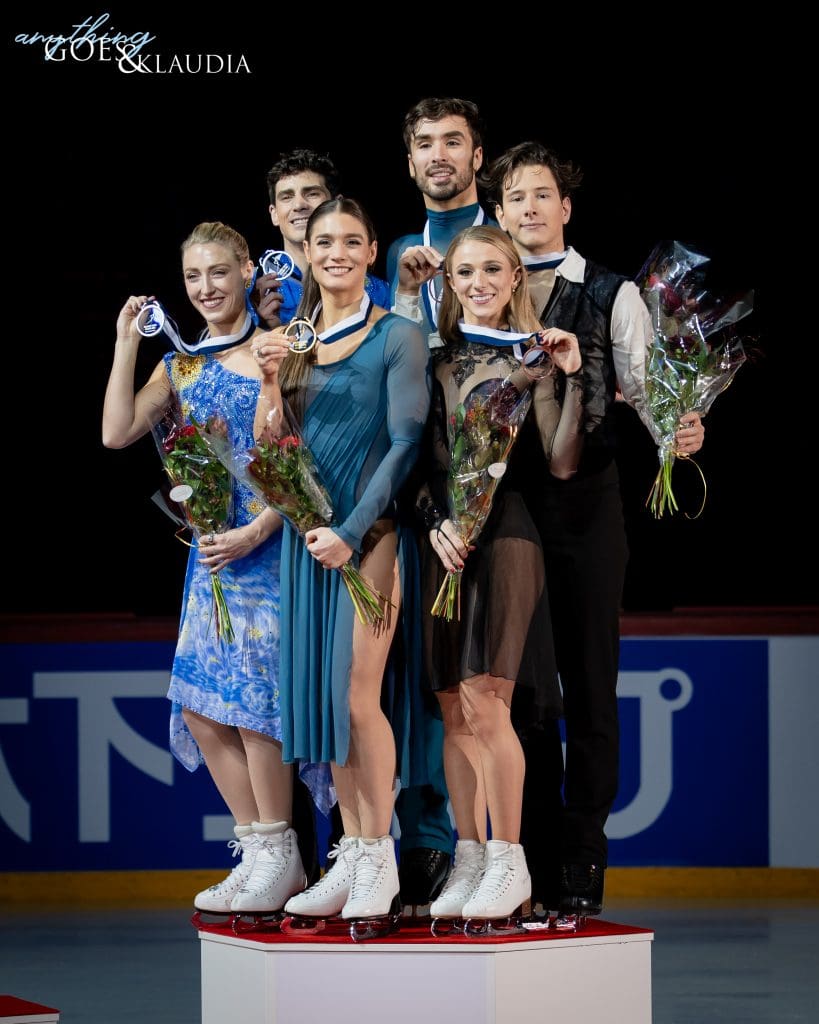
Some observers have noted that Rettstatt’s calls benefited bronze medalists Emilea Zingas and Vadym Kolesnik, a team whose coach, Igor Shpilband, Rettstatt has been friendly with in the past. Bev Smith has a detailed breakdown of Rettstatt’s history, and the potential impact on the judging at Skate America and Finlandia on her blog.
Gilles and Cizeron were vying for the title in Finland, and come from different nations and training centers. Part of what made the outcry from skaters so remarkable is that it extended to skaters from the powerful Ice Academy of Montreal, and those who work with other coaches.
Georgian dancers Diana Davis and Gleb Smolkin (who, like Cizeron, train at the Ice Academy of Montreal) received low levels and an exclamation mark on their choreo rhythm sequence.
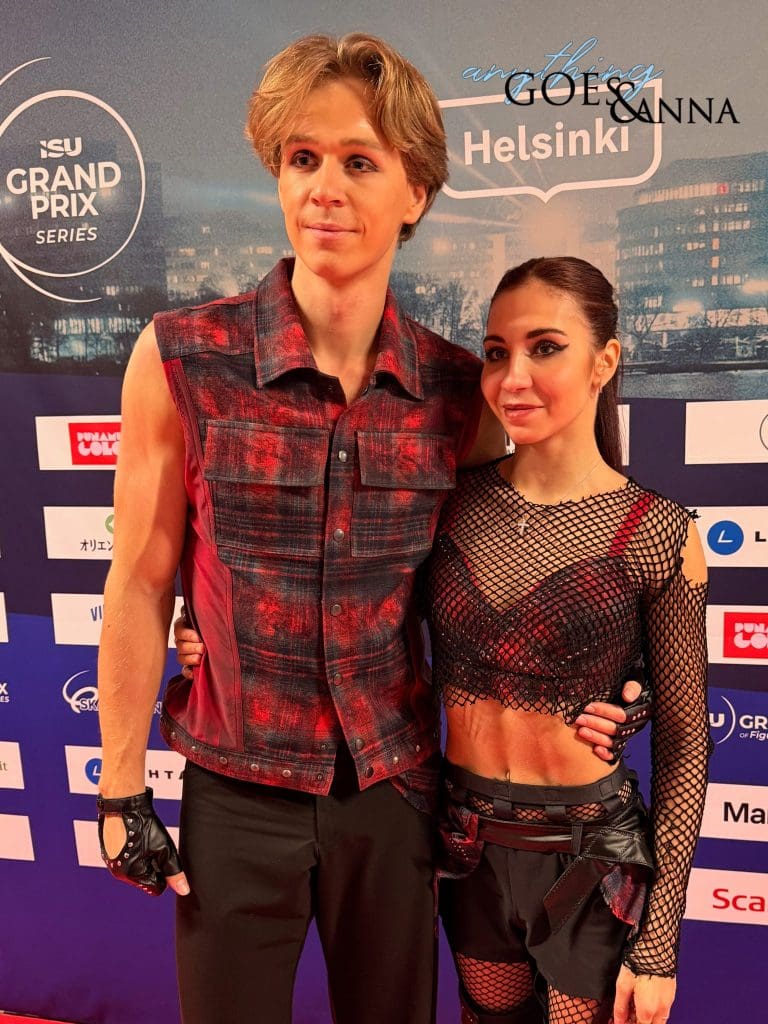
Smolkin’s frustration in the mixed zone was palpable.
“We have an exclamation mark on the choreo sequence, we just talked to the coaches, we have no idea why, even, like, possibly, we could have got an exclamation mark, because we’re close enough. But honestly, I have no idea. I honestly don’t know what to say… I’m a bit disappointed with my twizzle, but I don’t think we should be disappointed with the performance in general, but very disappointed with these scores, and it was very harsh and brutal, I would say.”
“So we want to hear some explanation. At least from our coaching team, maybe they will get a chance to find out what happened exactly and why it was so low…It’s already quite late, so ideally, it would be nice to go to bed, but it wouldn’t be possible. It wouldn’t be possible. Because it feels quite awful.”
After the Free Dance, Alex Shibutani was also struggling to understand why they were receiving lower levels than at the first Grand Prix. “I will always listen to the feedback that we receive, but I know that, for example, l just glanced at the screen, at NHK, we received level 3 for our midline step, and we received higher levels on our footwork at NHK, and we felt today that we had worked really hard on them and improved them, and performed them in the moment much stronger than NHK. But the levels were level one.”
“We want to create a full performance,” Maia emphasized, “and interweave the elements, so that they don’t even think that it’s something that’s being technically judged, because that’s really what dancing, in my opinion, is about.”
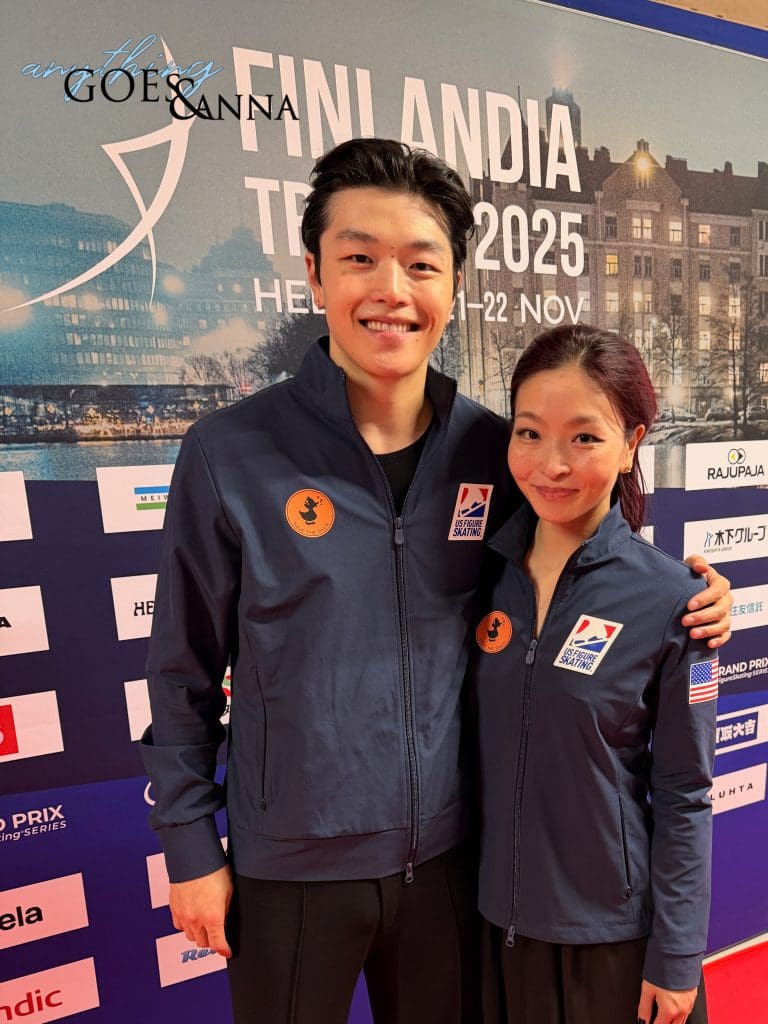
“It’s what, I think, draws fans,” added Alex, “because they can be drawn into the performance. And I do hope that, holistically, the discipline isn’t headed in a direction that is so technically…focused on the minutiae and the intense specificity of… not even just clean edges, but a little bit of snow flying off the blade, or the angle that the turn is placed at, where it starts to diminish, the skater’s focus from the performance itself into trying to check boxes or adhere to a standard that when you go to a competition, you’re never really sure what the standard is going to be.”
“It’s not that the skaters or coaches of these events are inexperienced. Everyone is seeking out the feedback and being very thoughtful in the development process. And they’ve done previous competitions prior to, for example, this one. I’m saying as much as I can without saying the obvious, but the obvious is truly just like everyone will work harder.”
The Finnish team of Yuka Orihara and Juho Pirinen was willing to accept the harsh technical feedback. “[The panel] are very, very strict, and I know that there was yesterday a discussion about it…” Pirinen said after the free dance. “Well, you just have to get better. Especially for us, we know that there is room to improve technically. We are very, let’s say, artistic, but we have to improve the technical side, of course.”
Orihara and Pirinen are one of the teams that has perhaps benefited the most from the introduction of choreo elements. Yet even this team has frustrations. What do they think is the ideal balance between the choreographic elements and more traditional ice dance elements?
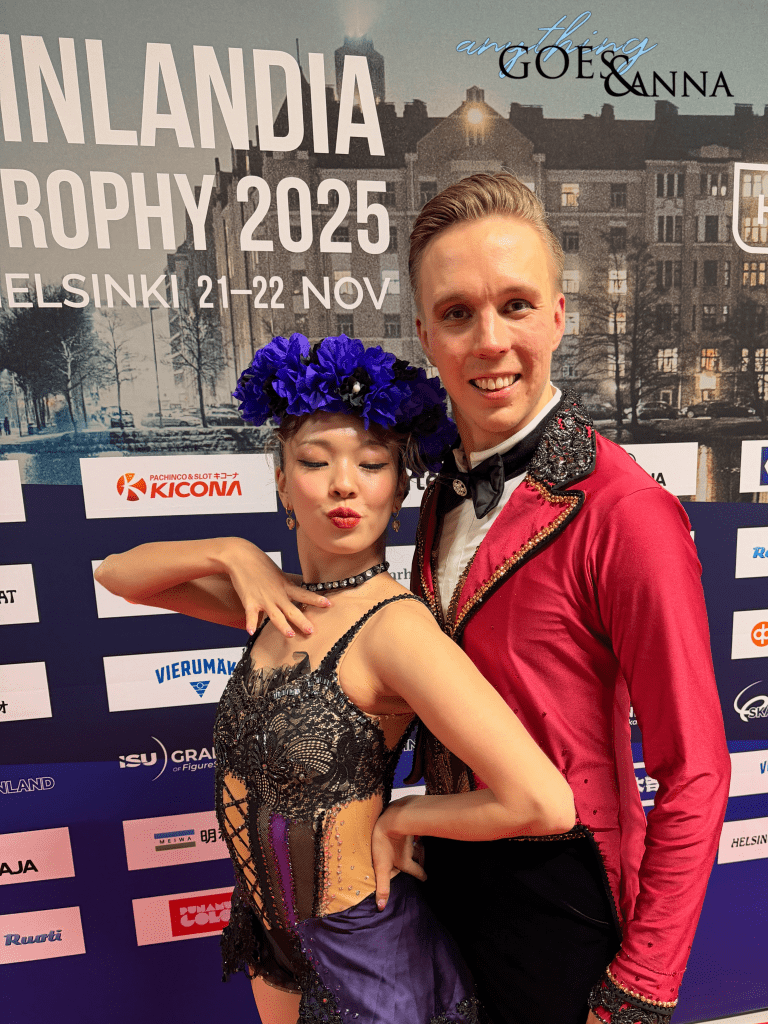
Yuka: “Oh my God, that’s very controversial. I don’t want to offend anybody.”
Juho: “Well, of course, we like the choreo elements.”
Yuka: “Yeah, I like it, but there’s so many restrictions, especially in the rhythm dance, so that we cannot separate more than blah, blah, blah. It was one of the hardest things when we built the choreo. They were just so many rules that we cannot even dance….”
Juho: “That’s when we were a little bit like, hmm, we wish it was something else.”
Orihara and Pirinen were not the only skaters who shy away from publicly expressing opinions about where they’d like to see the sport go in the future.
Off the record, several other skaters and coaches at Finlandia added that they don’t feel safe sharing opinions that go against the prevailing direction of the Committee, especially knowing that they or their skaters may end up having their elements reviewed by the members of the Committee.
What does accountability look like
Should the chair – or any member – of a Technical Committee be allowed to serve as an official at major competitions?
When the same person both writes and enforces the rules, that puts extra scrutiny on the field-of-play decisions. It also puts a damper on athletes’ and coaches’ willingness to engage constructively with the Committee – something that Rettstatt has said that he wants.
The Technical Committee is in charge of assigning officials to the technical panel at ISU events (these assignments have to be approved by the ISU President). In essence, Rettstatt assigned himself to the events. In the last eight seasons, Rettstatt has been referee or technical controller for at least one Grand Prix event per season. He has also been technical controller at several recent European Championships and World Junior Championships. His fellow Committee members also continue to serve as officials; Hilary Selby was technical controller at the World Championship dance events in 2025, 2024 and 2022; In 2025, Ingrid-Charlotte Wolter was technical controller at Europeans and David Molina was technical controller at Four Continents.
One thing to keep an eye on is whether this practice will change in the future.
After the Free Dance, Cizeron said, “I think there are a lot of important things that come out of this competition. It takes a lot for athletes to start calling things out—we want to please the judges. It’s important for athletes and coaches to have discussions. There’s a disconnect between the athletes, the coaches, and the fans [and the judges].

Gilles shared that she had received a lot of positive reactions from fans and fellow skaters to her words from the Rhythm Dance press conference. “We were speaking on behalf of the athletes, but also the fans, the ones that are supporting us every single year. So it was nice to see them kind of share that frustration, and, I don’t know, I think it motivates the athletes to use their voice. I think a lot of the time, we’re afraid of the repercussions of doing so.”
Those repercussions did cross her mind when she saw the Free Dance scores. “I was judged pretty tough today.”
However, she is glad she spoke out. “I think we’re at this point in our career, if we don’t say anything, nothing will change. So I’m really proud of what we did, but I still continue to hope that, you know, we are accountable for everything that we do out on the ice, but I don’t necessarily think that the judges and the technical panel are also accountable for what they do to the athletes. I think there needs to be an equal amount of respect between the two of us.”
What would it look like for officials and the ISU to be accountable to the athletes, coaches, and fans? A good start would be for the ISU to be transparent about their review. What is the scope? Who is conducting it? And what will the consequences be?
Transparency and accountability would go a long way toward rebuilding the fractured trust between athletes and fans and those who control the sport.