
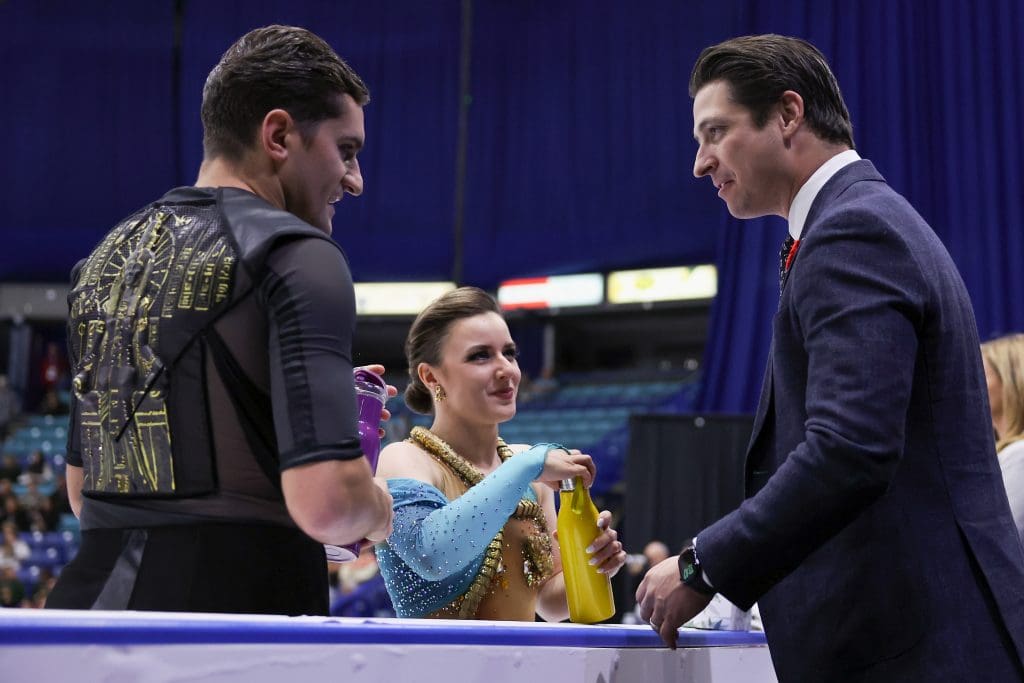
At the 2026 World Championships in Prague, athletes and coaches were buzzing about the rule changes for the next season, as well as the major changes the ISU Council is proposing as part of Vision 2030. Scott Moir – the most decorated ice dancer in Olympic history – shared his thoughts with AnythingGOEs on the return of the waltz pattern, the idea of a head-to-head compulsory dance challenge, and how shortening the program length would reduce both artistry and athleticism.
Anna: What did you think about the rules for next season that were announced at the Ice Dance Technical Committee (IDTC) meeting, and the proposals for 2027-2028 and beyond?
Scott: I actually thought it was a pretty good IDTC meeting. I’m excited to get the finalized version of the rules, ’cause we’re anxious to get to work, really. For me, I’m excited to have a waltz. I am excited to have a rhythm in the rhythm dance. And to be able to also have the freedom to keep it modern, or go classic, or make it dark. Just for us to have that creative liberty is super important, but we’re happy with the rules. I’m happy to do the Golden Waltz. I think that’s a very tricky dance. And it brings us a bit more back to our ice dance roots. Then there are a couple of interesting new things that I think the fans will enjoy. One more rev in the twizzles (requiring 5 instead of 4 revolutions for seniors – AGOE) and things like that.
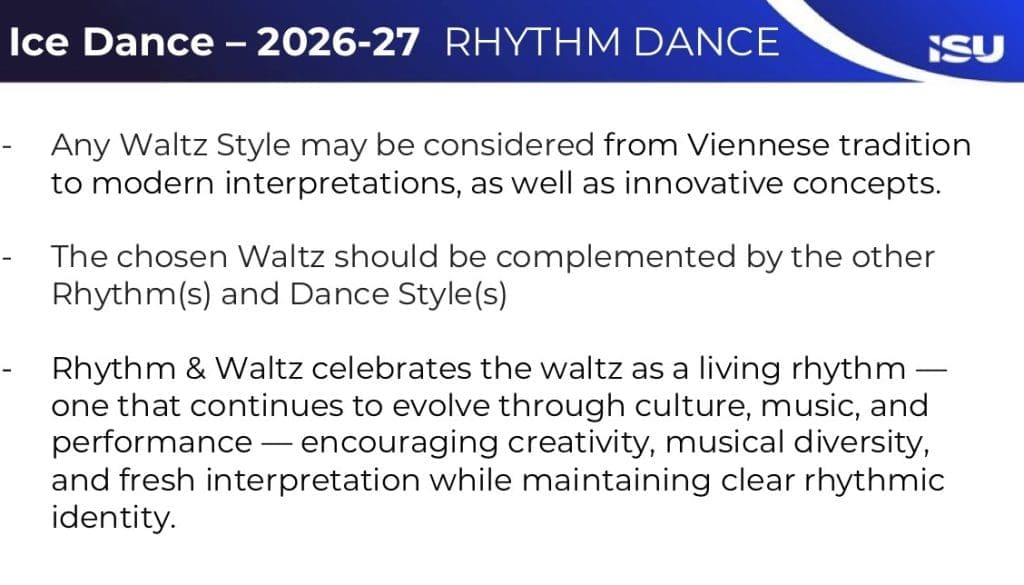
Anna: Yeah, I’m looking forward to seeing what everyone comes up with. I hope it allows for some more diversity across all of the programs than maybe we’ve had recently in rhythm dances.
Scott: I think so. I think what we’re finding, too, is that in the free dance, a lot of the rules are the same. I think, among us coaches, we feel like sometimes we don’t have the time to sink our teeth into the rules, you know? We just kind of figure out what works, and then they change up again. So I was happy about some of that consistency moving forward, as well.
Anna: And then, with some of the changes that are kind of more structural for 2027-2028, like the shorter programs, how do you feel about losing some time?
Scott: To be honest, I’ll push back on that a little bit. I understand that everybody wants that instant gratification these days, and that the attention span is getting less and less. But I think 4 minutes makes it more of a sport. For me, the 3:30 is what we’re doing in junior, and I think that extra 30 seconds makes a big difference, especially because these athletes have four minutes to create a sophisticated story, execute all the athleticism, and creativity, and then be able to bring it home. So, I already feel like four minutes is pretty tight. So that one worries me a little bit.
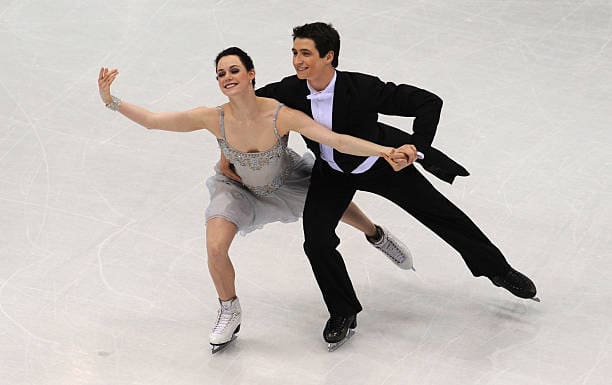
I also like the little challenge idea, where you’re going kind of head-to-head with other competitors and performing. I think that could be cool if it kind of took over for the exhibition. I think the athletes would like it, and it would be entertaining. And I always say, like, these athletes, they have personalities. We want to get to know them a little bit. I think a format like that could give them something, you know, where they’re going back and forth, and there’s a lot of amazing friendships behind the stage, and a lot of really great personalities. So competition like that might bring some of that out.
Anna: Do you feel like there’s good avenues to communicate your feedback to the ISU around this stuff?
Scott: Personally, I do. I don’t envy their job at all, particularly the IDTC. You know, we always talk about it, it’s easy to sit and complain, but what’s the idea then going forward?
A lot of it, for me, is around judges’ education. We have to trust the people that are sitting there, giving us marks, and the marks have to make sense for the people at home. When people tune into our sport, they need to understand at that level. It can’t just be people like me that have spent their whole entire lives in skating. So that’s the challenge that we have.
But I also just want to make sure – and that’s my constant feedback, I think, to the ISU and the IDTC – they need to remember that skating is a sport, and that there’s some really strong technical elements that need to be respected. And ice dance, even though the new viewers don’t see the jumps, and they don’t see the throws, and things like that, it’s very, very difficult, technically, to be able to skate this close, and at that speed, with these edges. So I hope some of that stays.
Anna: I’d love to see some creativity around how they film the pattern dance, especially with that head-to-head challenge idea. To be able see what you can see when you’re at ice level, just how physically demanding and intense it can be.
Scott: Totally. I’m also hoping that AI comes around. I think there’s a lot of our sport that we can do [with it]. We’re giving points now for ice coverage and speed and things like that. That can simply be generated by a computer now. And I think the beauty of ice dance is the art, so I don’t think [those statistics] should be a very big factor, but if we are giving awards for that, that’s something that we can just clearly calculate. Distance traveled, the top speed, things like that, and it can be a part of the calculation or the formula that gives us our final mark.
For people to connect to ice dance, we’re always gonna need the artists. We’re always gonna need the people to watch Laurence and Guillaume tonight and feel what they feel. And that should be, I think, the biggest deciding factor, but I think there are some things that we can use AI for.
Anna: The stuff that’s supposed to be objective, make more objective.
Scott: Absolutely. I love the idea of different camera views, you know. We’re a one-sided sport right now. And look at this arena. I mean, there’s people, and it’s packed, and they’re everywhere. And the good skater is giving a show to the people, they take care of every single seat and they make you feel welcome into the performance. We want to make sure that we’re not just playing to the 9 people or the one camera angle.
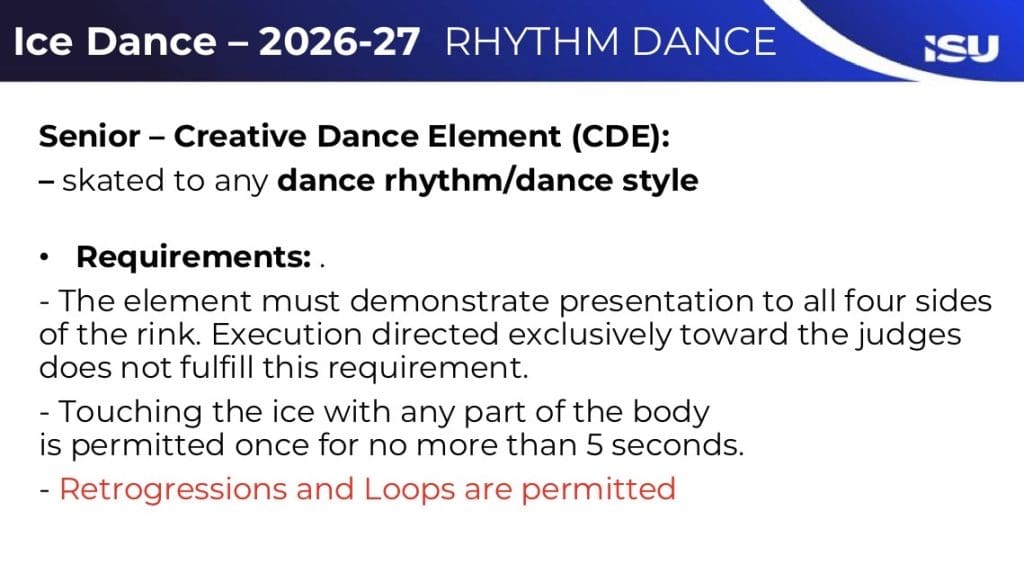
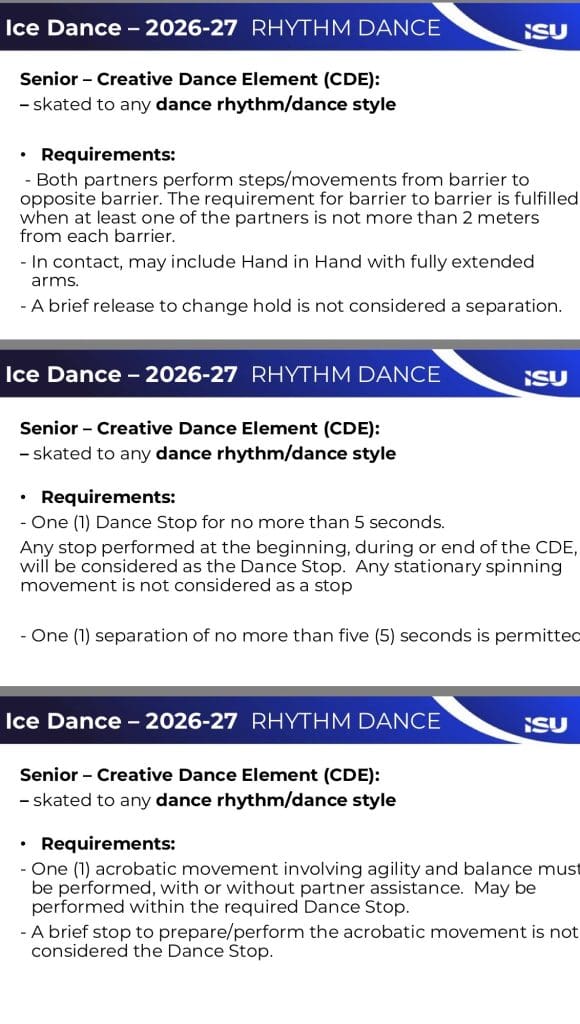
Anna: I was excited to hear in the rules for the new element [“Creative Dance Element”] that has to be performed in all the directions. It seemed like a great idea.
Scott: Yes, I think that’s smart. I mean, I think it should be built in already.
Anna: They had to say that, since that almost everyone [in the current choreographic rhythm step] zeroes in on the judges.
Scott: And sometimes they can feel a little bit cheap, a little bit cheesy. And I think when the viewer, yeah, tunes in, for those moments, they’re kind of like, ‘What the hell is this?’ Especially because there’s so much access to great dancing now online. You know, shows like, So You Think You Can Dance and even Dancing with the Stars. And they’re bringing in so many cool, different dance styles and modern dance styles, and if they see us out there kind of doing the penguin walk towards [the judges], it’s a little cheap. I think that’s a necessary change as well.
Read More:
“I Work in a Passionate Way” A Discussion with Karine Arribert